
Post-purchase emails: 12 examples to retain online customers in eCommerce
Learn how to increase repurchase with these 12 post-purchase email examples.
.png)
What are post-purchase emails?
Post-purchase emails Are notifications sent to customers after they've made an online purchase.It's common to think that these messages are only sent during delivery; however, they actually appear throughout the Entire post-purchase journey
- During delivery,
- Once the package has been delivered,
- And even afterwards, if the client decides to make a return.
Historically, these emails were limited to carrier notifications: you know, the classic “Royal Mail has shipped your order.” However, with the rise of post-purchase solutions, online retailers are increasingly sending fully branded email after purchase. These post-purchase emails are sent from the e-commerce online retailer themselves rather than a carrier, with the brand's own email address, logo and customizable information.
How do post-purchase emails retain eCommerce customers?
First things first: post-purchase emails enjoy high engagement — the average open rate is 60%, which is over 17% higher than open rates for the average email automation.
High post-purchase email engagement is key to retaining customers. With online customers eagerly anticipating their order, it's no wonder that post-purchase emails enjoy a 90% higher revenue per recipient (RPR) than your average email campaign.
But having customer's attention on post-purchase emails isn't enough: if you are really set on retaining shoppers, you need to know how to optimize post-purchase emails to induce repurchase.post-purchase emails to induce repurchase.post-purchase emails to induce repurchase.post-purchase emails to induce repurchase.post-purchase emails to induce repurchase.post-purchase emails retain e-commerce customers in 5 ways:
Post-purchase emails retain e-commerce customers in 5 ways
- A familiar branded experience
- Upsell and cross-sell
- Proactive communication when incidents arise
- Detailed order notifications (weather, customs, address issue, remote area...)
Why is customer retention from post-purchase emails important?
Improving customer loyalty should be a central objective for any e-commerce brand, because Retaining an existing customer costs 5 to 10 times less Than acquiring a new one.
And the numbers speak for themselves:
- Increasing customer retention rates by just 5% can increase profits by 25% to 95%
- Existing Customers Spend 31% more
- Existing customers are 50% more likely to try new products.
There are two types of customer retention when it comes to post-purchase: direct and indirect.
Direct customer retention:
Results from an immediate repurchase following a post-purchase email, for example:
- Upselling and cross-selling within post-purchase emails
- Engaging customers by directing them towards a social media page that includes their products
- Redirecting to their website after a delivery feedback survey
Indirect customer retention:
All the small details that will, In the long term, Improve the customer experience and in turn retain customers:
- Proactive email updates when an order is late
- FAQ within post-purchase emails to help guide customers
- Personalizing the branding and tone of voice in your communication.
Now that you're up to speed on the importance of customer retention, let's help you optimize your post-purchase emails to retain customers with real eCommerce brands spanning Zadig&Voltaire to L'Occitane en Provence.
12 examples of post-purchase emails from real eCommerce brands
Provide a familiar branded experience
1. Customize your post-purchase logo
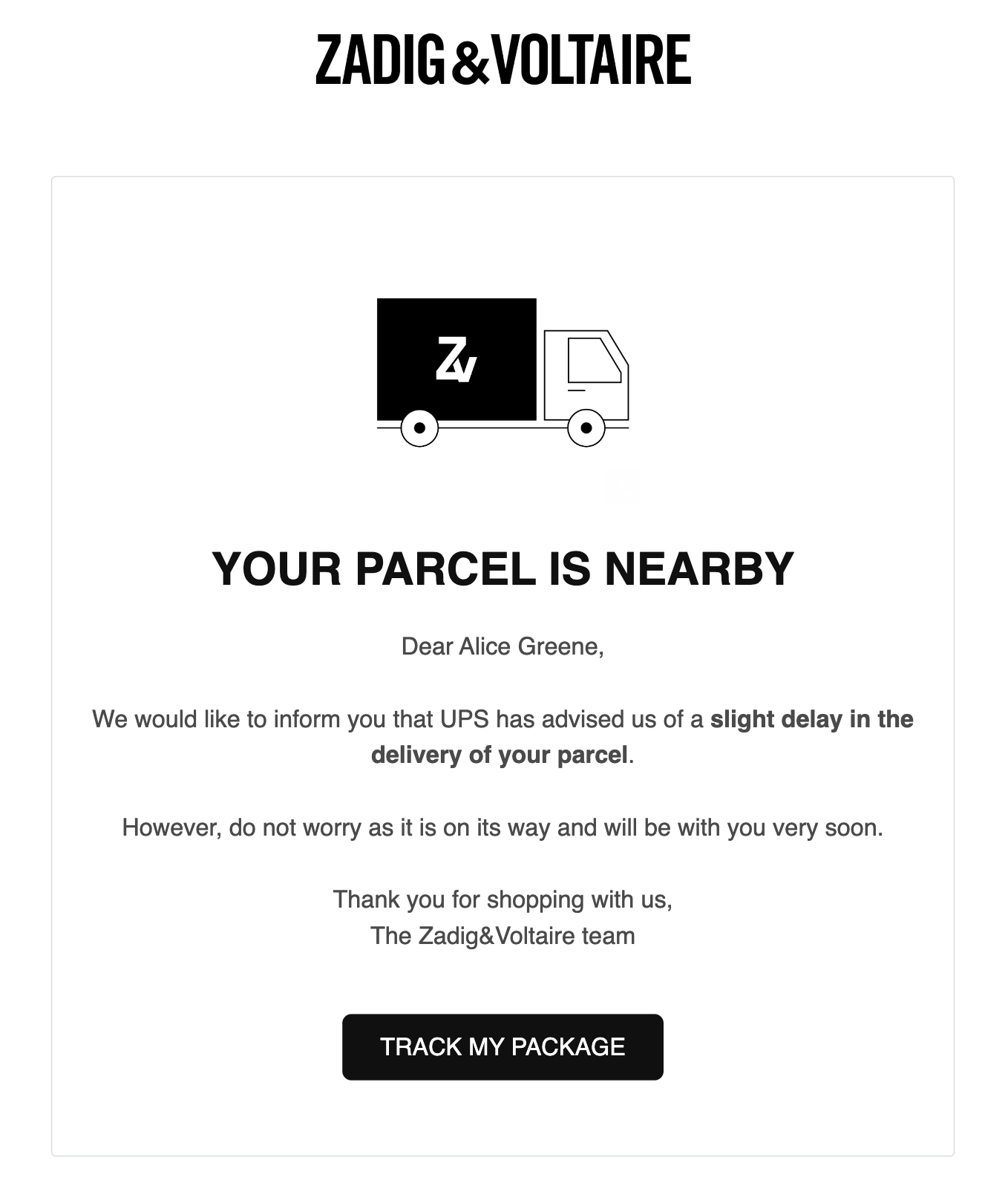
- Add a custom logo to the top of your post-purchase emails, as opposed to your standard logo
- Custom logos enhance the customer experience By reassuring customers thanks to their familiarity
- Custom logos also boosts customer experience by adding an element of exclusivity: many have seen the fashion E-Tailer Zadig&Voltaire's logo, but only the online retailer's customers will see their custom logo (unless you're reading this article - our apologies)
- We recommend an icon size of around 400 pixels.
2. Adapt your post-purchase logo to different post-purchase events

- Go a step further and tailor your email logo to specific events after purchase
- Here, Printemps .com — the online arm of the iconic Parisian department store — includes different logos for 'package shipped' post-purchase emails, and 'package delivered'
- Adapting your post-purchase email logo to the event can help improve email recognition: customers can easily identify what the email is about — this comes in particularly handy when they're reading it via mobile on the go
3. Tailor your copy to your brand
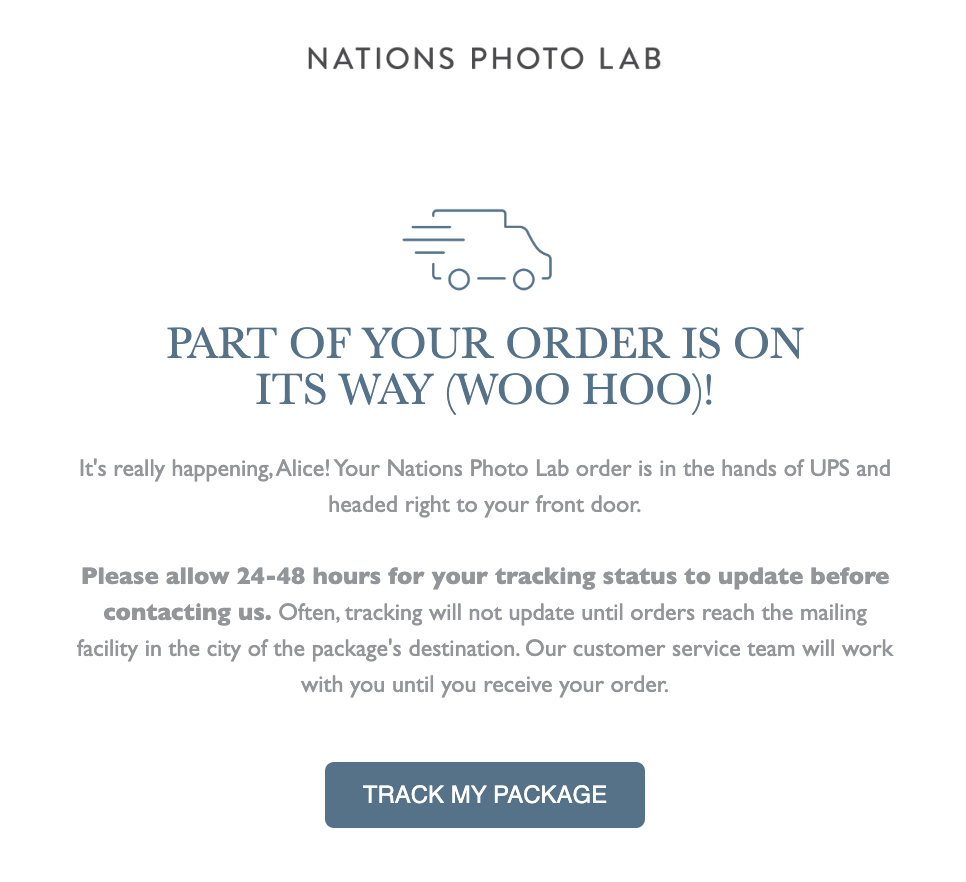
- Images aren't everything: make sure your brand voice shines throughout delivery and beyond by tailoring your messaging
- Nations Photo Lab, specializing in innovative, high-quality photo prints and decor, playfully adapts their messaging to their products in the post-purchase emails
- Adapt copy for each and every one of your post-purchase emails by playing with tone, metaphors, alliterations and even puns if they fit your brand
- Post-purchase is a boring and often anxiety-inducing time: lighten customers' mood with your post-purchase email copy
4. Tell your brand story with video

- Embed videos directly in your post-purchase emails, from YouTube to Vimeo
- Kind Laundry, an eco-friendly company that provides alternatives traditional detergent, harnesses post-purchase emails to explain how to use their laundry strips and how the budding brand's products are environmentally conscious
- Keep the video short and sweet (1 minute max) to keep your customer engaged and tell your story quickly
- Use an eye-catching thumbnail: include human emotive visuals such as human's faces, incorporate, your branding, and make sure that the thumbnail is optimized for mobile seeing as this is where the majority of customers read their emails.
Upsell and cross-sell through post-purchase email
5. Personalize your product recommendations
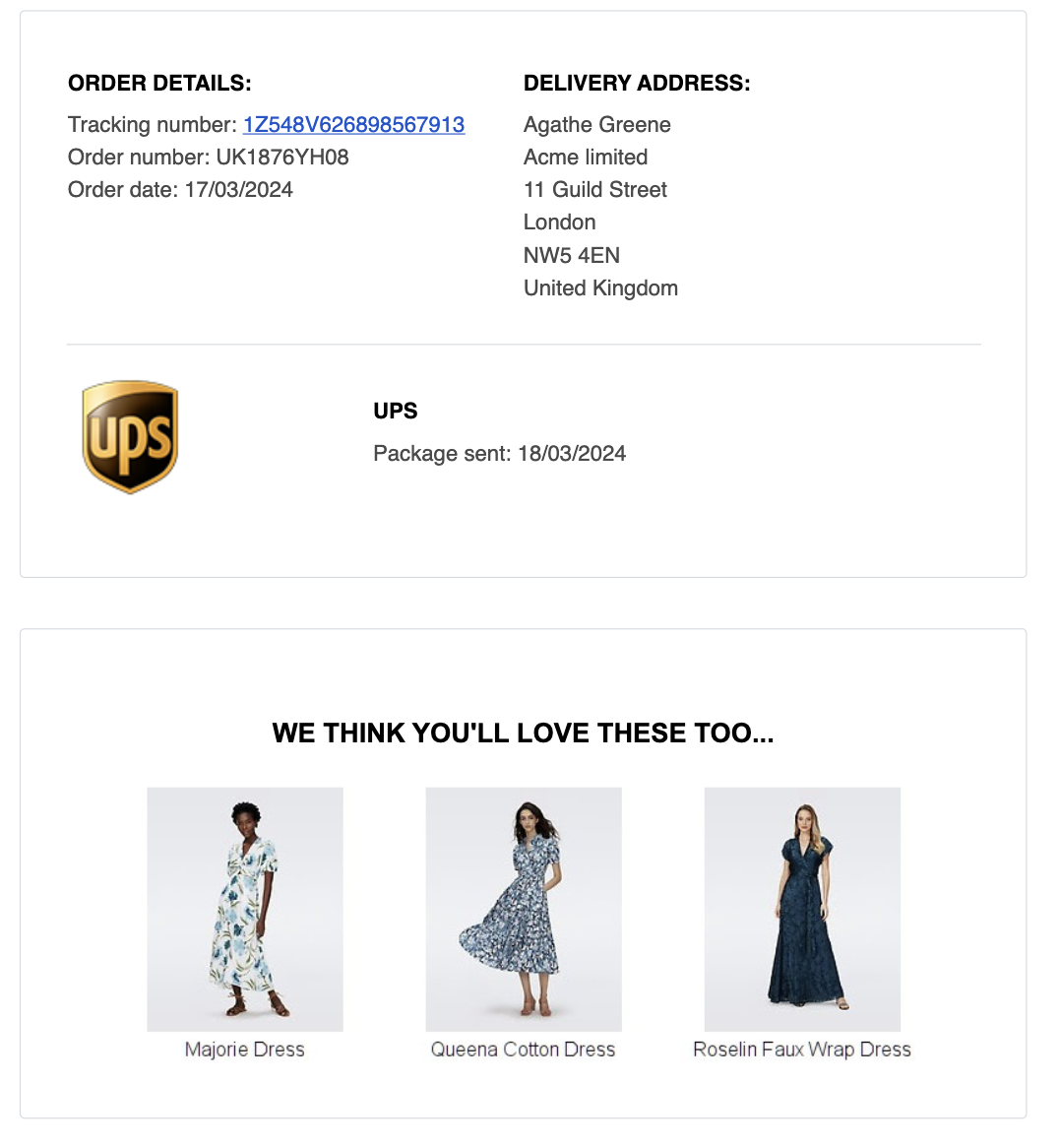
- Personalize your product recommendations within post-purchase emails
- Above, Diane Von Furstenberg— best known for their iconic wrap dress— recommends similar clothing items based on the purchase of a dress
- Use engaging taglines - here are some ideas: 'Top Picks for You', 'Handpicked for You', 'You Might Also Like... 'or 'Customers Who Bought This Item Also Bought'
- Harness generative AI-based product recommendations which suggest products purchase history, but also geography, age, relationship status or items that are frequently bought together to 'complete the look'
- A word of advice: include no more than 3-5 product recommendations at a time to avoid decision fatigue
- Don't forget to focus on recommendation timing: custom birthdays and anniversaries are a perfect time to personalize product recommendations.
6. Promote your seasonal offers
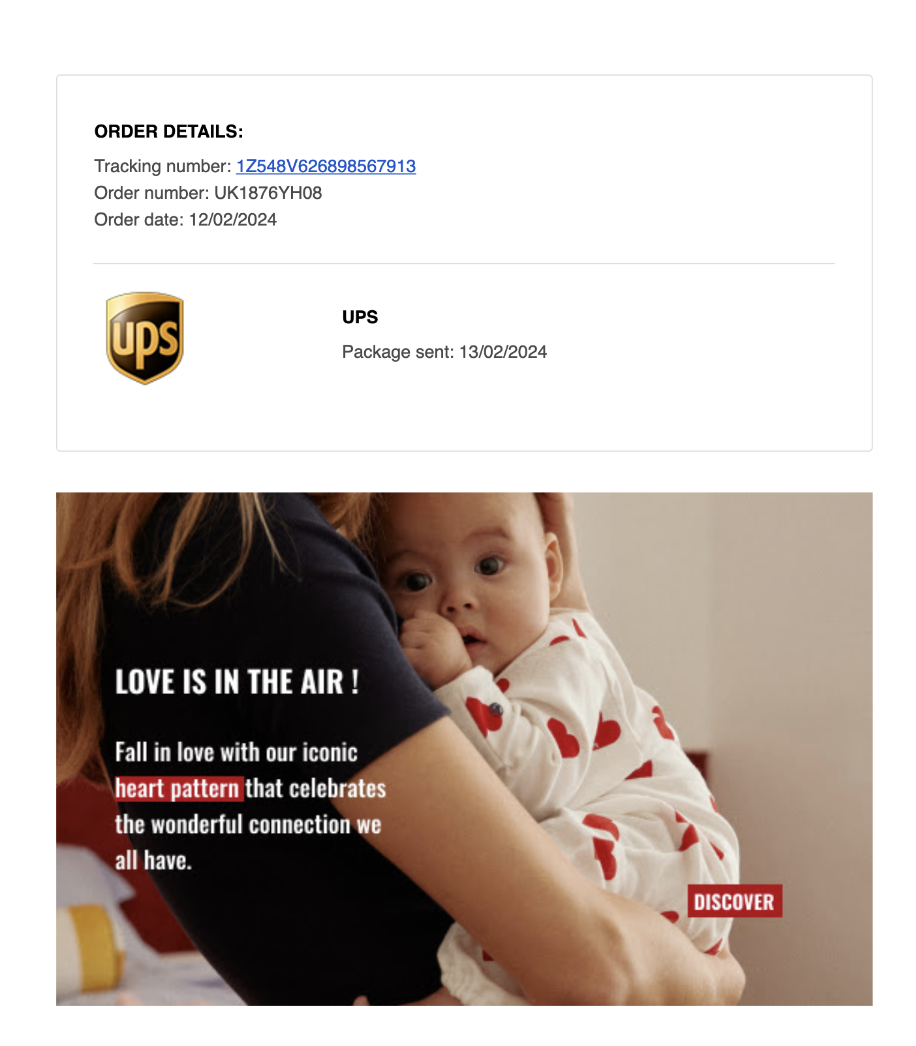
- Make sure to adapt your promotions within post-purchase emails to key eCommerce holidays, from Black Friday to National Returns Day (bet you haven't heard that one before!)
- Above, e-tailer Petit Bateau promotes their heart pattern to celebrate Valentine's Day
- Want more inspiration? Discover a Complete list of eCommerce holidays 2026.
7. Showcase your rewards & referral programs
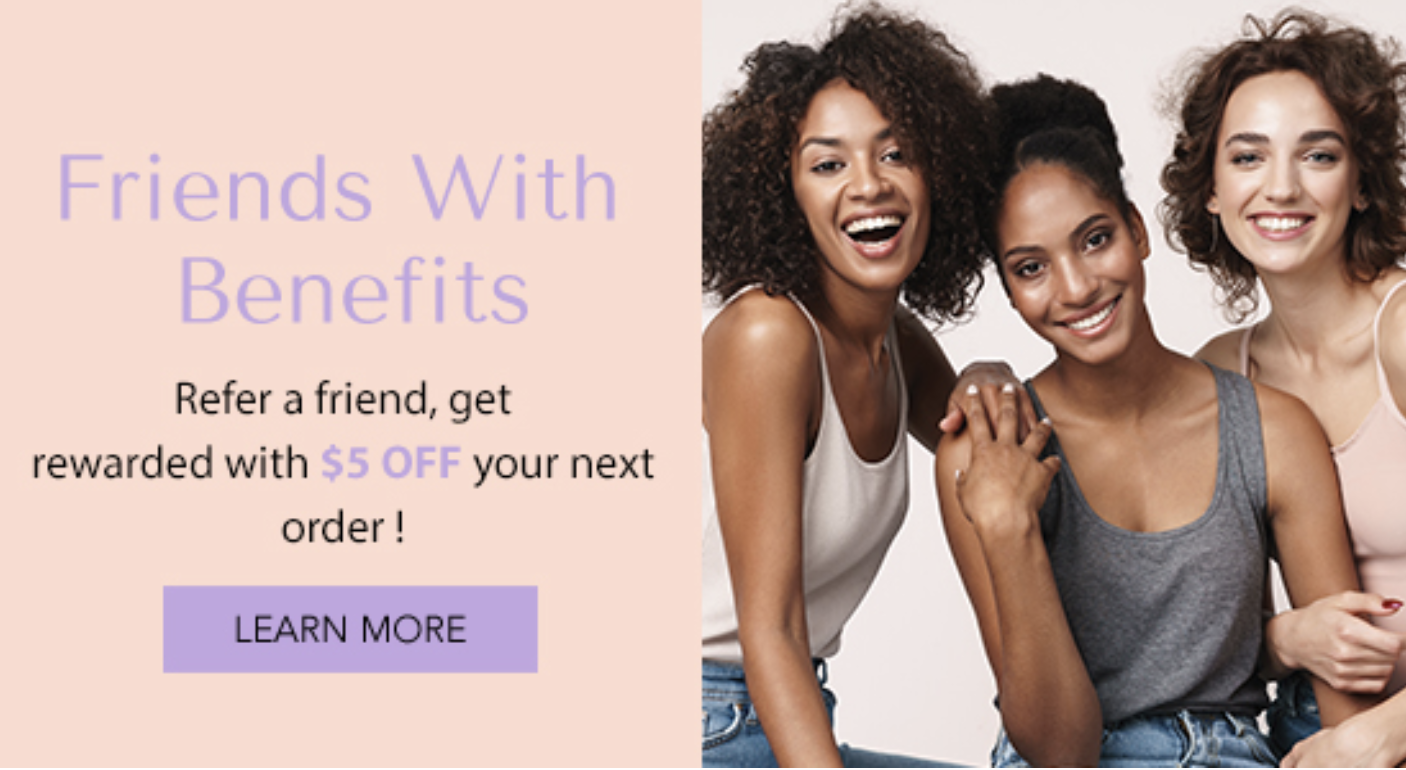
- Include referral marketing in your post-purchase emails to retain current customers and increase profits, while also acquiring new ones
- Referral offers traditionally included discounts on the next order, which can be used as discount codes or points
- The amount you refer will depend on your industry - but as a benchmark we recommend that your keep referral discounts between 10% and 20%
- eCommerce retailers often only offer a discount on the next order after a certain amount spent, to incentivize the customer to spend more
- Offer tiered incentives to gamify the experience and push customers to spend more
- Create urgency with limited-time friend discounts that will incentivize customers to spend more
Provide proactive order communication
8. Inform customers about delivery incidents with proactive notifications
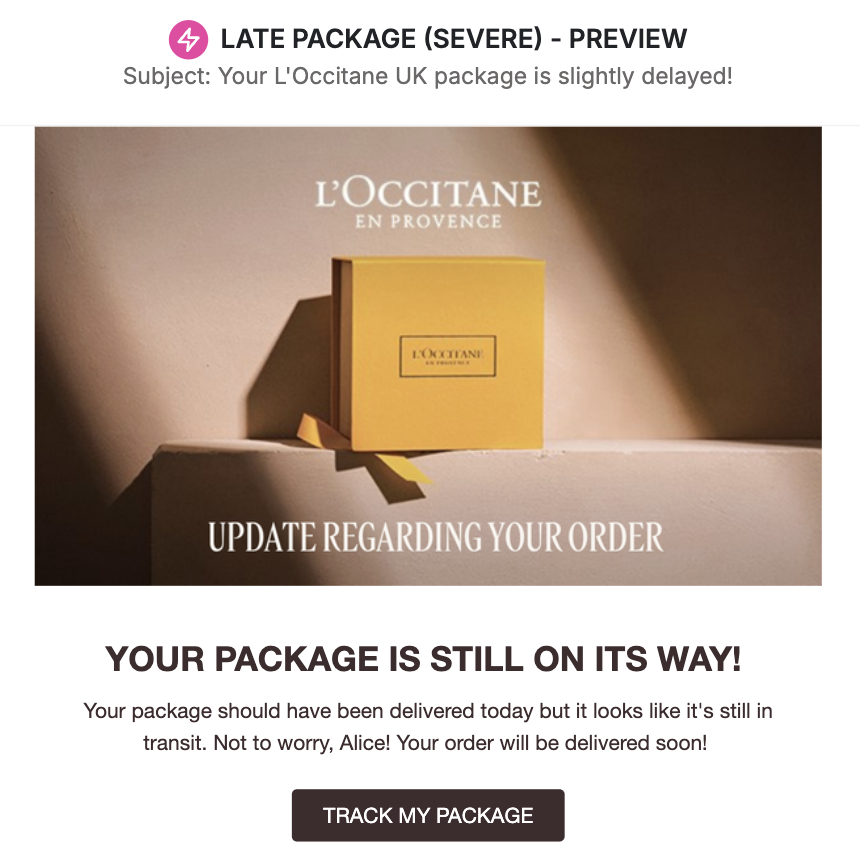
- It's all well and good to keep customers informed about delivery issues that do occur, but eCommerce retailer must go a step further by proactively communicating on events that events that don't take place when they should have
- Let us explain: cosmetics brand L'Occitane automatically sends customers a branded email notification when a parcel is late, that is when they detect that delivery did not occur when expected
- Other events that retailers should be sending proactive post-purchase mail notifications to include no tracking update emails, order without tracking, tracker not shipped or order waiting at pickup point.
- eCommerce retailers should adapt the numbers of days after which these post-purchase email notification to the type of alert: 0 days for late package, or 2 days for no tracking updates
Engage with customers
9. Ask for Feedback

- Post-purchase emails shouldn't just be used to relay information to the customer, but rather to engage with them and ask for their feedback
- Meal delivery platform Purple Carrot asks for customer feedback by including feedback forms directly in their 'package delivered' emails, redirecting to two respective feedback forms via clickable thumbs up or down emoji
- If the customers had a negative experience, the customer's issue should be resolved fluidly and they should contacted by customer support if need be
- On the flipside, customers that had a positive delivery experience should be encouraged to share their feedback (there's always room for improvement!) , and relay their experience on review platforms
10. Encourage customers to review you publicly
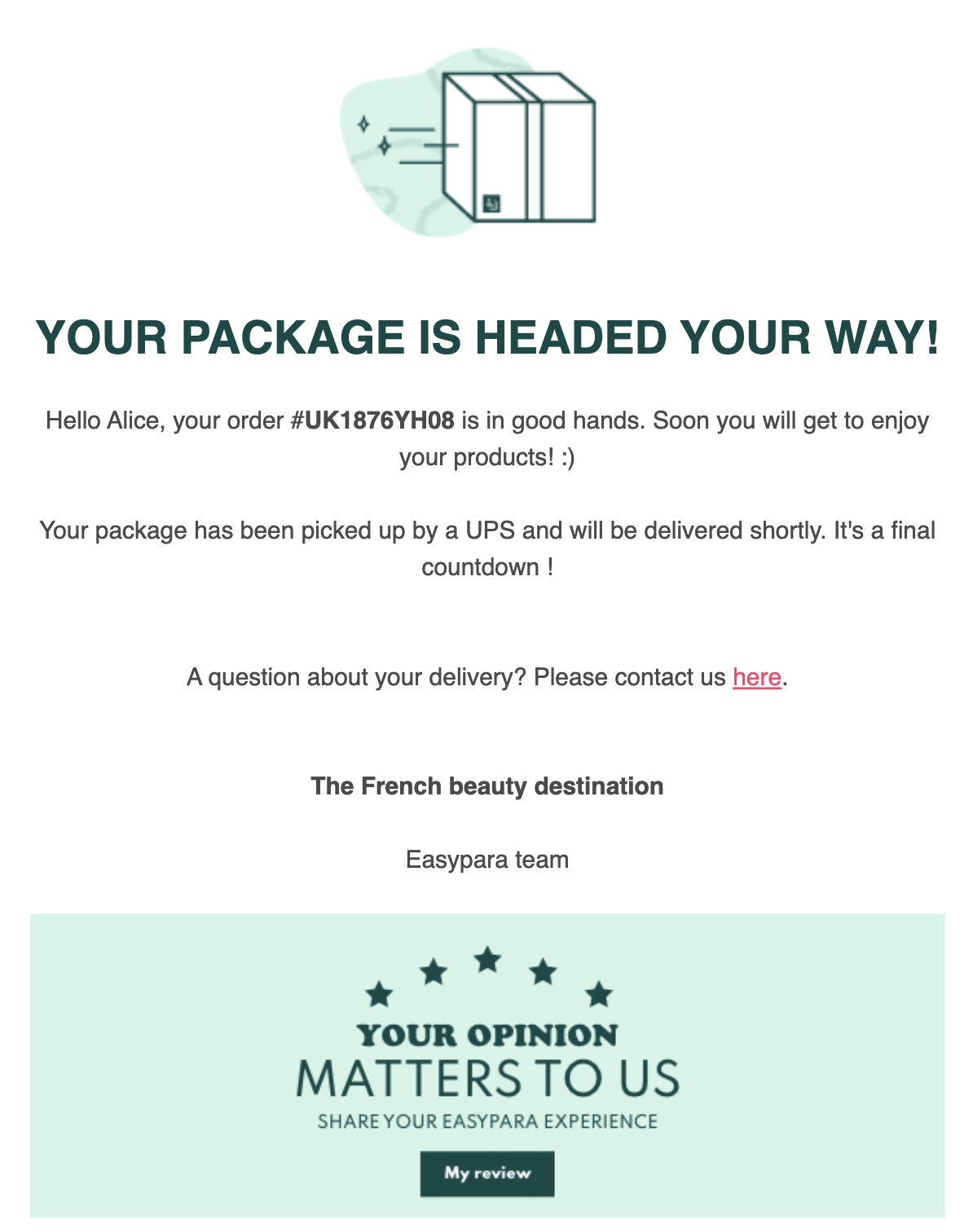
- French online pharmacy Easypara highlights their Trustpilot page in their post-purchase emails to encourage them to review their delivery experience, achieving an impressive 4.2/5 score on the review website with 16K+ reviews
- Online reviews are essential for business: 50% of consumers Feel that online business reviews are as trustworthy as personal recommendations from friends or family
- Educate your customers on how many customers read and rely on reviews to encourage them to share their experience via post-purchase emails
- Other tactics to induce feedback include harnessing post-purchase emails to show off thoughtful reviews others have left and again you have taken reviewers' public feedback onboard with concrete actions.
11. Invite customers to interact with your social media communities

- Including your brand's social media handles in your post-purchase emails is a great start towards introducing them to your communities
- However, if you want to take it up a notch and get customers truly engaged with your brand, eCommerce retailers must go to a step further and include a social media call to action in their post-purchase emails
- Outdoor gear and clothing brand Hardloop harnesses post-purchase emails to call upon customers to call upon customers to call upon customers to call upon customers to call upon customers to share their images on Instagram with a dedicated hashtag, exposing them to other customers and reinforcing the brand's community
- Other community-building ideas for your post-purchase emails include comment-to-win contest, followers milestones giveaways or 'caption this photo' challenge
12. Promote your values
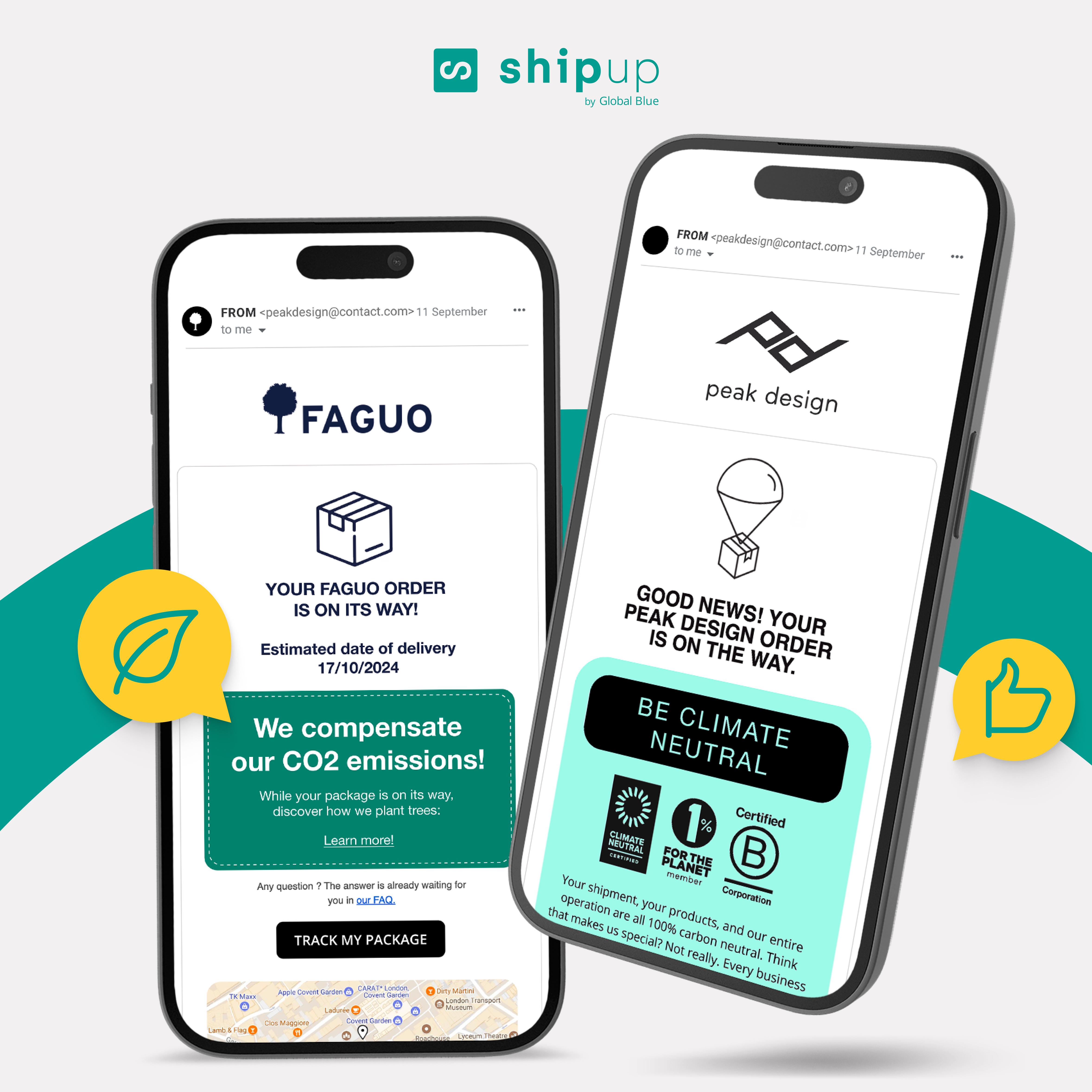
- From donating portion of revenue to nonprofits or showcasing your social certification (B-Corp, Fairtrade), highlighting your company values in your post-purchase emails is critical to ensuring customer retention
- Case in point: clothing eCommerce retail Faguo showcases that they compensating for CO2 emissions, highlighting their environmental commitment
- Nearly 64% of consumers cite Shared Values As a primary reason they have a relationship with a brand in the first place.
- Display your values at the top of your post-purchase emails to gain maximum visibility,
Ensure that you demonstrate your values with key figures, images and an FAQ to give your brand more credibility: you don't want to be accused of practices such as greenwashing.
Why order returns communication is important for customer retention
First things first: it is essential that eCommerce online brands understand that A Return Does Not Equal a Refund. Our recent consumer study of 6,000 shoppers found that Half (53%) of shoppers want the flexibility to choose between multiple returns options, including:
- Exchanging their product
- Benefitting from store credit
As such, returns offer a massive opportunity to retain customers: many are open to give the brand a second try with a different product. However, with customers issuing a return already more cautious about shopping your brand if, say, the product didn't fit, it's essential that you master your post-purchase email communication to give a second good impression.
Of the 2/3 of Shoppers Making Returns in the Past Month, 80% say that proactive email alerts about their return are important.

Yet, worryingly, 11% of customers don't receive any returns information at all, while 34% Say That The Information Is Confusing or Confusing.So, with customer retention in mind, is paramount that online retailers follow up with email notifications during the returns stage.
French fashion e-tailer Hardloop Send their customers a dedicated email when a package is returned.
To fight customer anxiety, it is essential that they detail How Long It Will Take to Receive the Exempt Product
Key takeaways:
Post-purchase emails, sent after an online purchase, are crucial for customer retention due to their high engagement rates. They Enhance Retention Through
- Branding
- Upselling
- proactive communication
- Customer engagement
Ultimately, when leveraged properly, the post-purchase stage is an incredible opportunity to boost profits and foster long-term loyalty by improving the overall customer experience.
Frequently Asked Questions

.jpeg)

Since 2023, Joseph Thurston has been responsible for content creation at Shipup by ZigZag. He designs high value-added and directly actionable resources for brands that sell online, in order to help them improve their post-purchase experience and transform delivery into a driver of loyalty and growth.


.png)
