
New 2026 Small Parcel Tax France: Key Changes Explained
The 2026 Small Parcel Tax introduces a new tax framework for low-value imports from outside the European Union, with direct impacts on e-commerce and international platforms.
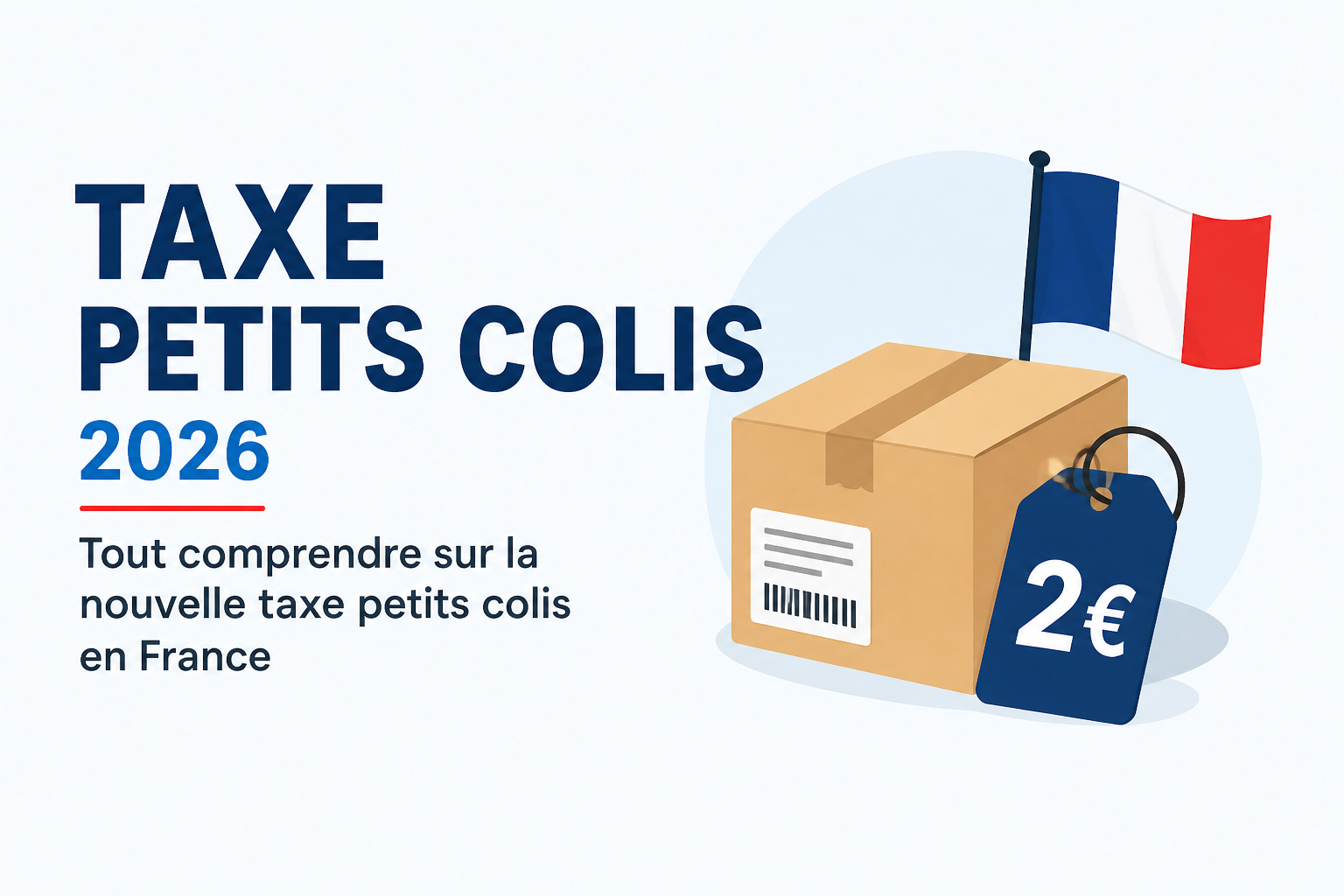
Since March 1, 2026, France has implemented a new regulation called Small Parcel Tax, which aims to better regulate low-value imports from international online commerce.
This is a significant measure. It addresses a massive transformation in global e-commerce, marked by an explosion of low-priced single shipments, often shipped directly from non-EU countries. For years, these flows benefited from tax and customs treatment that was difficult to control, creating significant competitive distortion with European players.
With this reform, France therefore seeks to regain control over these volumes while rebalancing the playing field.
What is the Small Parcel Tax?
The Small Parcel Tax is a flat-rate tax applied to shipments with a value under 150 euros from non-EU countries.
It primarily targets purchases made on international platforms, especially in models where products are shipped directly from abroad to the final consumer, without going through local stock.
Unlike traditional customs duties, this tax was designed to be simple and quick to apply, in order to adapt to extremely high volumes of small shipments.
Why this tax was implemented
The implementation of this tax is due to several key observations.
Firstly, the volume of imported small parcels has literally exploded in recent years, with hundreds of millions of shipments annually in France. A significant portion of these parcels was either under-declared or difficult to control individually, which limited the effectiveness of existing tax mechanisms.
Secondly, this situation created unfair competition. European sellers have to bear VAT, local logistics costs, and stricter regulatory obligations, while some international sellers could offer extremely low prices thanks to these loopholes.
Ultimately, authorities are seeking to modernize customs control by adapting to a massively fragmented e-commerce landscape.
Which parcels are affected?
The tax applies to all parcels meeting the following conditions:
- a value under 150 euros
- originating from outside the European Union
- shipped to a private individual (primarily B2C)
This includes, in particular:
- purchases from international marketplaces
- dropshipping shipments
- direct shipments from warehouses located in Asia or other third countries
Intra-European shipments, however, are not affected by this tax.
How much is the small parcel tax?
The principle is simple: the tax is set at 2 euros per item contained in the parcel.
This means that the total amount depends directly on the number of products declared in the shipment, and not solely on the overall value of the parcel.
How the tax actually works
In practice, the small parcel tax integrates into existing mechanisms, particularly customs declaration systems and import VAT.
The process involves several steps: the package is declared, its contents are classified according to customs categories, and then the tax is calculated based on the number of items.
In most cases, this tax is not paid directly by the consumer. It is generally handled upstream by e-commerce platforms, logistics operators, or importers, and then indirectly passed on in the final price.
Who is truly affected?
Even if the measure seems technical, its effects are very tangible.
The primary parties affected are international e-commerce platforms and dropshipping sellers, whose models are based precisely on shipping low-value, single-item products.
Companies using the IOSS (Import One Stop Shop) system are also affected, as they must integrate this new tax into their declaration processes.
More broadly, all companies regularly importing low-value products must review their operations.
What are the impacts for businesses?
The main impact is obviously financial. A €2 tax per item might seem small, but it becomes significant for very low-priced products, sometimes sold for just a few euros. In some cases, it can represent a substantial portion of the margin.
Beyond the cost, the reform also introduces additional operational complexity. Businesses must improve the accuracy of their product data, refine their customs classification, and adapt their IT systems.
But the most significant change is undoubtedly strategic.
Many companies are already starting to review their logistics organization to limit the impact of this tax. This includes:
- establishing stock in Europe
- consolidating shipments
- increasing the average order value
- or even the partial relocation of flows
The objective is clear: to avoid repeated taxation on single shipments.
A measure that is part of a European dynamic
The small parcel tax should not be seen as an isolated initiative. It is part of a broader evolution of European e-commerce regulations.
Since the 2021 VAT reform and the implementation of the IOSS system, the European Union has sought to better regulate cross-border flows. Several projects are under discussion, including the abolition of the €150 threshold and the creation of a harmonized system for small consignments.
In this context, the French tax appears to be an interim measure, which could evolve in the coming years.
Key takeaways
To summarize, a few key points help to fully understand the reform:
Conclusion
The small parcel tax marks an important step in the regulation of international e-commerce. It puts an end to a grey area that allowed some players to partially circumvent traditional tax rules.
For businesses, this reform requires rapid adaptation, both operationally and strategically. It also accelerates a fundamental trend: the shift from e-commerce based on individual international shipments to a more structured, often locally anchored model.
In the medium term, this tax could foreshadow a broader overhaul of the European framework, with harmonized rules for all small cross-border consignments.
Frequently Asked Questions

.jpeg)

Since 2023, Joseph Thurston has been responsible for content creation at Shipup by ZigZag. He designs high value-added and directly actionable resources for brands that sell online, in order to help them improve their post-purchase experience and transform delivery into a driver of loyalty and growth.


.png)
