
Reverse Logistics: Definition, Challenges, and Concrete Examples in E-commerce
Reverse logistics has become a strategic imperative for e-commerce brands. Discover its definition, benefits, challenges, and practical examples for optimizing product returns.
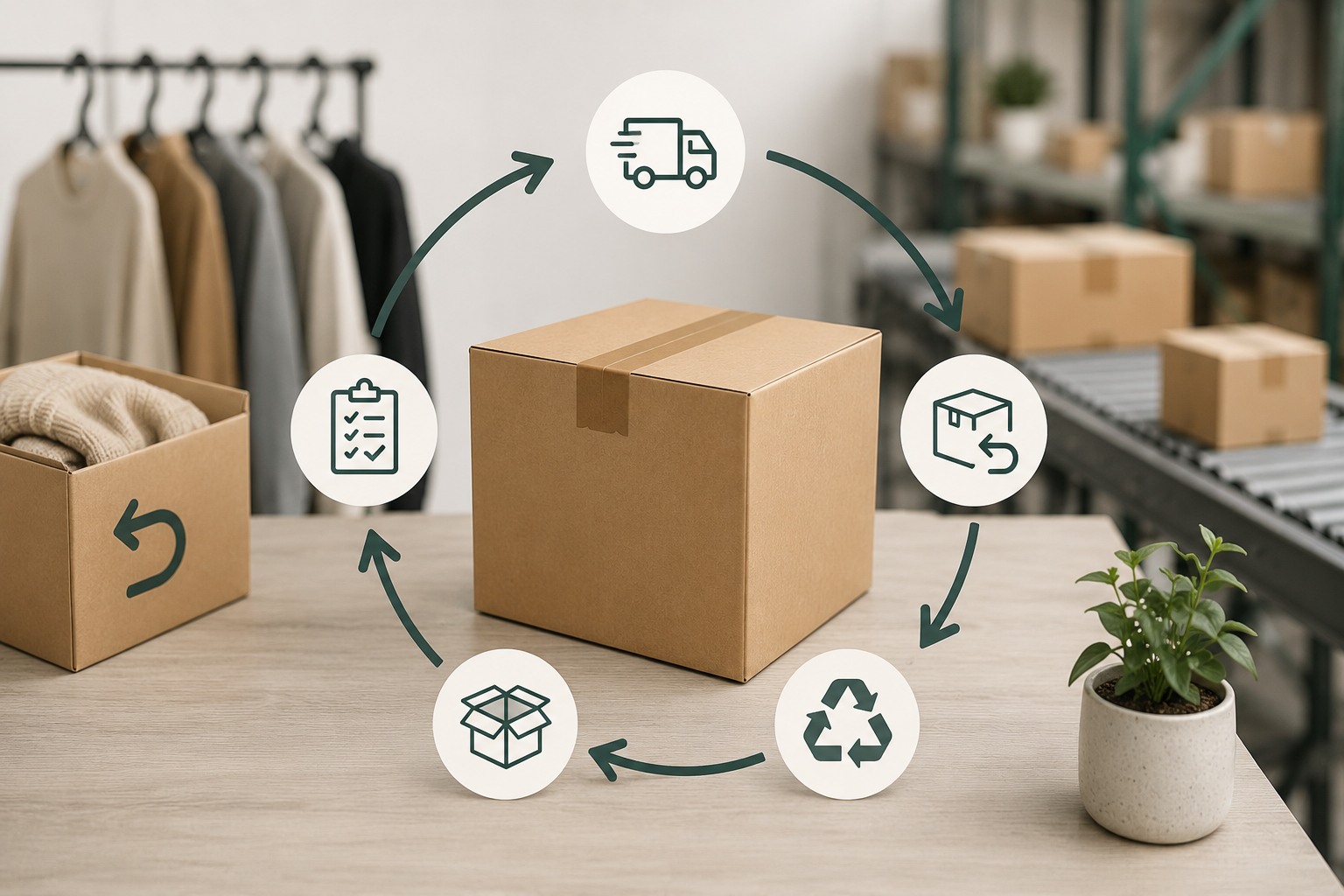
The reverse logistics, also known as reverse logistics, refers to all operations involved in returning a product from the consumer to the company. Unlike traditional logistics, which organizes the delivery of goods to the end customer, reverse logistics manages flows in the opposite direction.
Long considered a mere operational matter, it has now become a true strategic imperative. The e-commerce boom, the increase in product returns, and new consumer expectations are forcing brands to completely rethink their returns management.
In certain sectors like fashion, the return rate is 18.8%. According to a study, 82% of consumers in France state they would avoid a brand after a poor return experience. Reverse logistics therefore directly influences conversion, customer loyalty, and profitability.
What is Reverse Logistics?
Reverse logistics encompasses all steps related to a product's return after delivery. This can include:
- customer returns;
- exchanges;
- refurbishment;
- repairs;
- recycling;
- restocking;
- managing unsold items.
The goal is to recover maximum value while limiting logistical and environmental costs.
In e-commerce, the most common scenario remains the classic product return: a customer receives an item that doesn't meet their expectations, requests a return, and then the company must process the package quickly to refund the customer or put the item back into circulation.
The development of reverse logistics is directly linked to the growth of online commerce. According to Statista, global e-commerce sales are expected to exceed $8 trillion by 2027, which automatically leads to an increase in return volumes.
Why Reverse Logistics Has Become Essential
The rise of online commerce has profoundly transformed supply chains. Today, product returns are an integral part of the shopping experience and directly influence customer satisfaction.
Consumers now expect simple, fast, and transparent returns. A poor post-purchase experience can damage a brand's image, while a smooth process fosters loyalty and repeat purchases.
Reverse logistics has also become a major challenge for several reasons:
- return rates in e-commerce can exceed 30% in certain sectors like fashion;
- costs associated with returns (transport, storage, quality control, refunds) heavily impact profitability;
- 77% of consumers check the return policy before purchasing;
- companies seek to reduce the environmental impact of returns through recycling and reconditioning.
According to several industry estimates, returns can account for up to 20% of total logistics costs for some e-commerce brands.
Given these challenges, companies are increasingly investing in solutions that can automate and simplify returns management to improve both customer experience and operational efficiency.
Key Steps in Reverse Logistics
Companies that automate these steps generally reduce their processing times and improve profitability. According to Shopify, a quick refund can significantly increase the likelihood of a customer reordering from the brand.
Concrete Examples of Reverse Logistics
Fashion and Textile E-commerce
The fashion industry is particularly affected by reverse logistics. Returns due to sizing, fit, or personal preferences are extremely common. Some brands handle several thousand returns per day during sales periods.
According to the Appriss Retail Report, apparel represents one of the categories with the highest return rates in global e-commerce.
To handle these volumes, companies invest in tools capable of automating return processing and improving customer communication.
This is particularly true for solutions like the e-commerce returns portal from Shipup, which allows centralizing return requests, automating workflows, and offering smoother tracking for consumers.
Electronics and Tech
In electronics, reverse logistics is essential for managing:
- defective devices;
- warranties;
- repairs;
- refurbishment.
The refurbished market is experiencing strong growth. According to IDC, the global refurbished smartphone market now exceeds $70 billion.
Retail
Retail chains use reverse logistics to manage unsold products, product recalls, and packaging recycling.
In some cases, returned goods can be redistributed to other points of sale or resold through secondary channels to limit financial losses.
The Economic Stakes of Reverse Logistics
Inefficient reverse logistics can quickly become a significant cost center for e-commerce businesses. Between shipping costs, quality checks, refurbishment, and refunds, each return directly reduces the margin made on an order.
Industry figures show the extent of the phenomenon:
- the average e-commerce return rate varies between 15% and 30% depending on the sector;
- in fashion, the return rate in 2026 is 18.8%. ;
- each return costs an average of €15 to process ;
- 66% of French consumers read the return policy before making a purchase
Poor return management also impacts customer loyalty. According to Shipup, 79% of consumers switch brands after a bad return experience.
To limit these costs, brands are now looking to automate and accelerate return processing to restock products faster and reduce the customer service workload.
How to optimize reverse logistics?
Optimizing reverse logistics primarily relies on a smooth return journey. The simpler the process is for the customer and the more automated it is for teams, the lower the operational costs.
Many brands are now investing in specialized platforms, such as the e-commerce returns portal from Shipup to centralize and automate the entire process.
Specifically, this type of solution allows for:
- offering a 100% digital return process;
- automatically generating return labels;
- tracking return packages in real-time;
- automating refunds and exchanges;
- analyzing return reasons to reduce future product returns.
According to our data, brands using their returns portal notably observe:
- up to 23% fewer support tickets related to returns;
- a reduction in returns of up to 8% ;
- an increase of 15 NPS points after implementing the portal;
- a return process achievable in approximately 1 minute via a self-service process.
Automation also improves visibility into the causes of returns. Teams can identify problematic products, adjust product sheets, enhance size guides, or optimize description quality to reduce returns at the source.
Finally, reverse logistics is also becoming an environmental lever. Companies are increasingly looking to promote reconditioning, recycling, and rapid restocking of products to limit waste and unnecessary transportation.
Conclusion
The reverse logistics has become a key element of e-commerce performance. Far beyond simple product returns, it now influences customer satisfaction, profitability, and companies' environmental impact.
With the constant increase in return volumes, brands must invest in smoother, more automated, and more sustainable processes. Companies capable of optimizing their returns management now have a real competitive advantage.
Frequently Asked Questions

.jpeg)

Since 2023, Joseph Thurston has been responsible for content creation at Shipup by ZigZag. He designs high value-added and directly actionable resources for brands that sell online, in order to help them improve their post-purchase experience and transform delivery into a driver of loyalty and growth.


.png)
