
E-commerce return policy: How to reduce cart abandonment with a better return experience
Discover how a clear return policy can reduce cart abandonment, simplify the customer experience, and better meet consumer expectations in France.
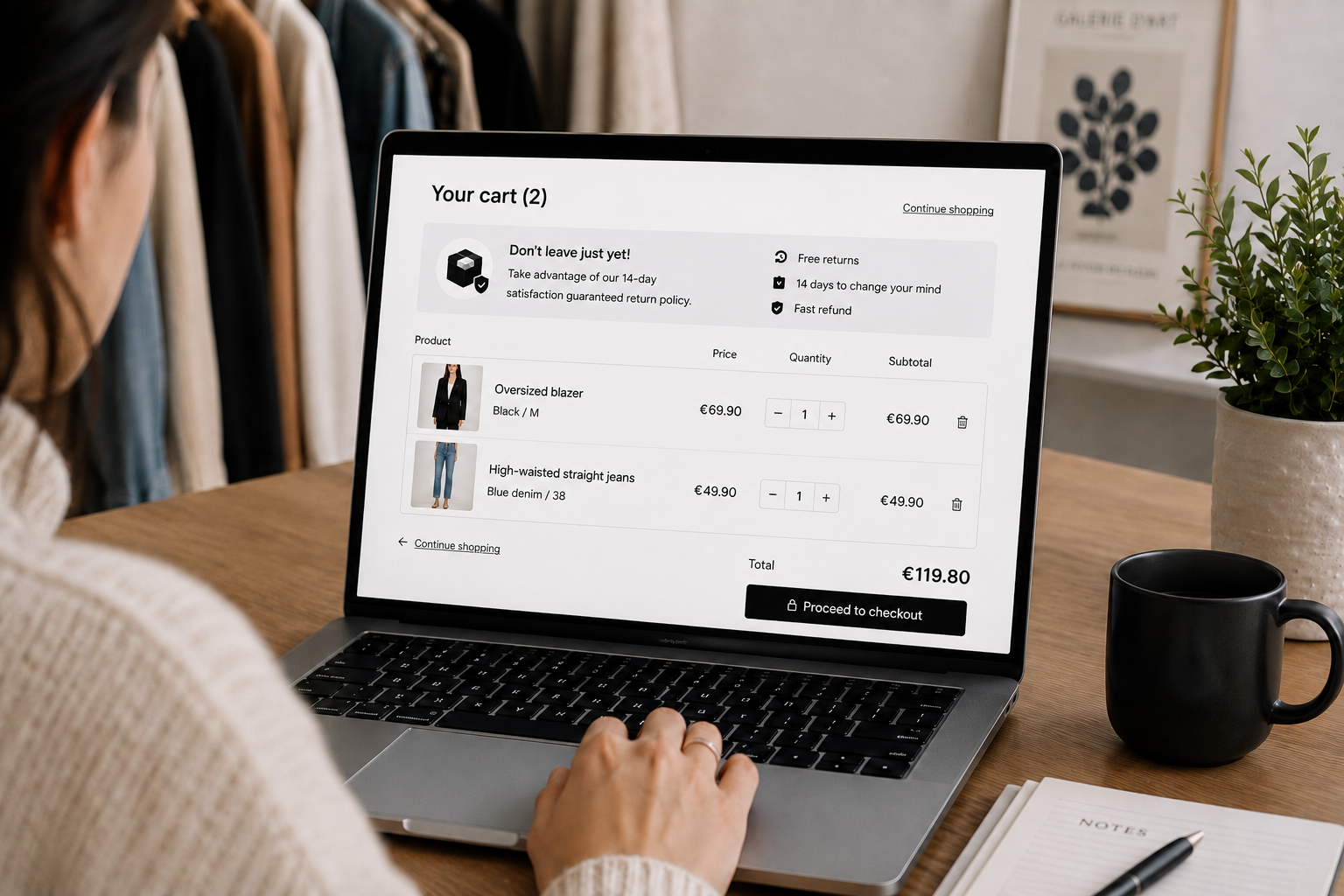
A customer finds the right product, checks the price, adds it to their cart… then hesitates: “what if it doesn’t fit?” At this stage, the return policy becomes a deciding factor. If it is hard to find, too restrictive, or simply ambiguous, it adds risk at the very moment the customer is looking for reassurance.
This is why an e-commerce return policy should not be treated as a customer service formality. It is part of the shopping journey. According to a study conducted by Sapio Research for ZigZag Global among 2,000 French consumers, 54% say they always check the return policy before buying online. Even more telling, one in two has already abandoned a purchase because the policy felt too strict, unclear, or difficult to find.
The return experience therefore begins long before a product is actually sent back. When they order, the customer is already answering a simple question: “what happens if this doesn’t work out?”
For online retailers, the return policy is a conversion lever in its own right. Its job is not only to frame reverse logistics after the purchase: it has to reduce perceived risk before the order, remove the last hesitations, and make the buying decision easier.
This article starts from that observation and sets out seven concrete actions, ordered the way the customer asks the questions, to reduce cart abandonment through your return policy.
The return policy is read before the purchase, not after
For a long time, returns were treated as the last step of the e-commerce journey: a customer orders, receives the parcel, then may decide to send an item back. The French data shows the opposite. Consumers think about returns far earlier, and for more than one buyer in two, return terms are part of the purchase decision itself.
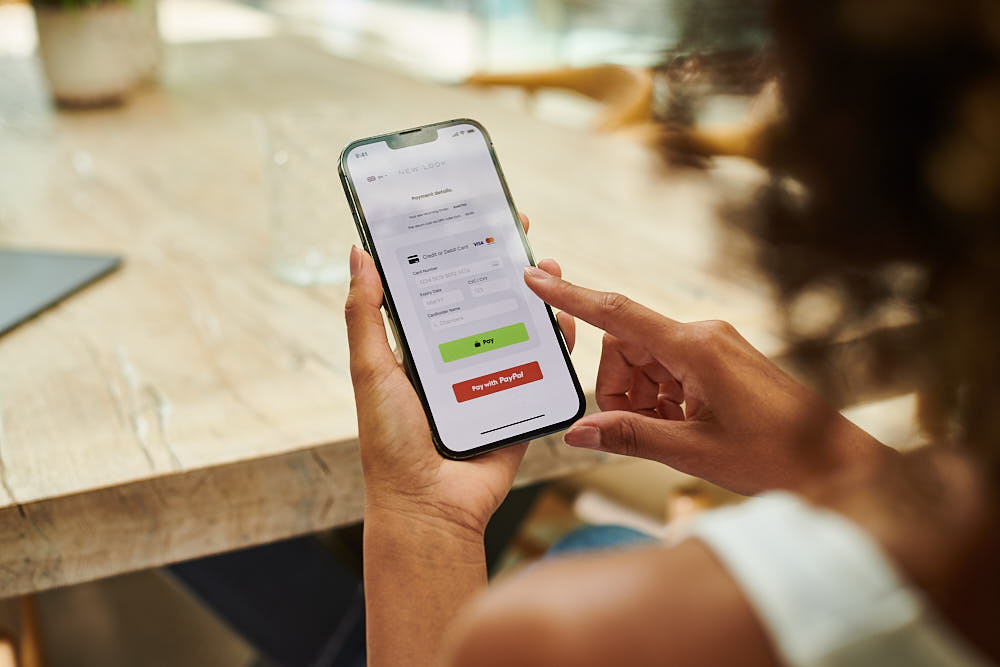
The customer is not only asking whether they will be able to send the product back. They are measuring the risk they take by ordering at all. Before checkout, four questions make the difference:
- How long do I have to change my mind?
- Is the return free or paid?
- How will I have to send the product back?
- When will I be refunded?
The easier those answers are to find and understand, the more the policy does its reassuring job. Conversely, an ambiguous condition, a cost discovered late, or a process that looks complicated adds friction at the exact moment the consumer is hesitating.
This is not theoretical: 50% of French consumers say they have already abandoned a purchase because the return policy was too strict, unclear, or difficult to find.
Key behaviours and expectations of French consumers around returns
Source: study conducted by Sapio Research for ZigZag Global among 2,000 French consumers.
These figures place the stakes at two moments. Before the order, the policy either reassures or triggers abandonment. After the order, the actual experience has to confirm the promise made to the customer. The first three actions below deal with the first moment, the next four with the second.
1. Answer the “what if it doesn’t fit?” objection on the product page
The reassuring role of the return policy matters most when the consumer cannot know whether the product will suit them before receiving it. Fashion is the clearest example.
Product pages can be detailed, photographs numerous, and size guides precise, yet none of these tools tells a shopper exactly how a garment will fit before they try it on. Consumers say so themselves: 62% would rather buy their clothes in store because judging fit online is too difficult. In other words, a significant share of your visitors arrives on the product page with a doubt the page alone will not remove.
That doubt then shows up in return rates. French consumers report returning an average of 18.09% of their online clothing purchases and 14.38% of their footwear purchases. Among Gen Z, those figures rise to 28.81% and 20.85%.
The reasons behind those returns matter as much as their frequency.
Main reasons for clothing and footwear returns in France
A return is therefore not always the result of a careless purchase. It is often the consequence of uncertainty that cannot be fully removed at a distance.
For a customer torn between two sizes, the goal is not to guarantee they will choose correctly. It is to show them that a mistake will be easy to fix. That is when the return policy becomes a conversion argument: it lowers the perceived cost of a bad decision.
What you can do:
- show a short message next to the add-to-cart button, along the lines of “30 days to change your mind”, “size exchange available”, or “return to a pickup point”;
- concentrate those mentions on the categories where sizing doubt is strongest, rather than across the whole catalogue;
- use return reasons product by product: a line that concentrates wrong-size returns points to a size guide worth fixing, which reduces both returns and hesitation.
2. Show the policy at the three moments of doubt
A return policy can be perfectly written and still have no effect if the consumer has to go looking for it. This is probably the most direct lever on cart abandonment: do not wait for the customer to hunt for the information themselves.
Worth repeating: 50% of French consumers have already abandoned a purchase because the policy was unclear, hard to find, or too strict. In all three cases, the problem shows up before the order, on a product page or in a checkout flow.
The essentials should therefore be visible in three places:
- on the product page, next to the add-to-cart button;
- in the cart;
- before the final order confirmation.
There is no need to reproduce the full terms and conditions. Four pieces of information are enough: the window, any fees, the main return methods, and the refund timeframe, with a link to the full policy. The rule is simple: the more a piece of information can influence the buying decision, the less it should be hidden.
Consumers do not judge the policy in its legal sense alone, they judge the experience it implies. 60% rate ease of returns as very or extremely important in their post-purchase experience, and 65% say the same about returns being free. The question is not only “am I allowed to return this item?”, but “if I have to return it, is this going to be a hassle?”
3. State the cost of a return before the order, not after
Making returns simpler does not mean making them free in every situation. French consumers accept that nuance:
- 76% think it is fair for a retailer to reward customers who return at a reasonable rate with free returns, while applying different conditions to very frequent returners;
- 72% would rather pay a flat €2.50 fee covering the return of a whole order than see the price of every item rise by €2.50 to fund free returns.

Reducing cart abandonment therefore does not require promising free returns to everyone. What it does require is that any cost be predictable before the order.
There is an important nuance here. 54% of consumers say a return fee would put them off sending an item back. A retailer may see that as a way to bring return rates down. Mechanically that is true, but the same mechanism works upstream: once fees are stated clearly before the purchase, they enter the customer’s risk calculation at the very moment they are hesitating to order. Charging for returns is a legitimate decision, as long as you accept that it is also paid for in conversion, and calibrate it rather than stumble into it.
For conversion, the real risk is not that a return costs money. It is that the customer finds out too late.
A brand can charge for some returns and still keep a reassuring policy if it states clearly:
- the amount of the fee;
- the situations in which it applies;
- any free alternatives, such as returning in store;
- the exceptions that apply depending on the return reason.
A slightly less generous but perfectly readable policy inspires more trust than a promise of “easy returns” wrapped in restrictions discovered after the purchase. ZigZag’s paid returns features make it possible to vary the rules by return scenario rather than apply a single policy. Whatever the approach, the rule stays the same: return fees should never be a bad surprise after the order.
The four actions that follow deal with the actual return experience. They count for conversion because they decide whether the promise displayed before the order is credible, and because a customer disappointed once carries that experience into their next purchase decision: 72% say they are less likely to buy again after a bad return experience.
4. Let the customer choose their return method
A process can be simple on paper and still be impractical in real life. A customer working in a city centre does not face the same constraints as one living in a rural area. Some prefer the post office, others a parcel shop, an automated locker, or a return in store.
77% of French consumers say it matters to be able to choose between several carriers when returning an item, and only 6% disagree. It is the most consensual expectation in the whole study.
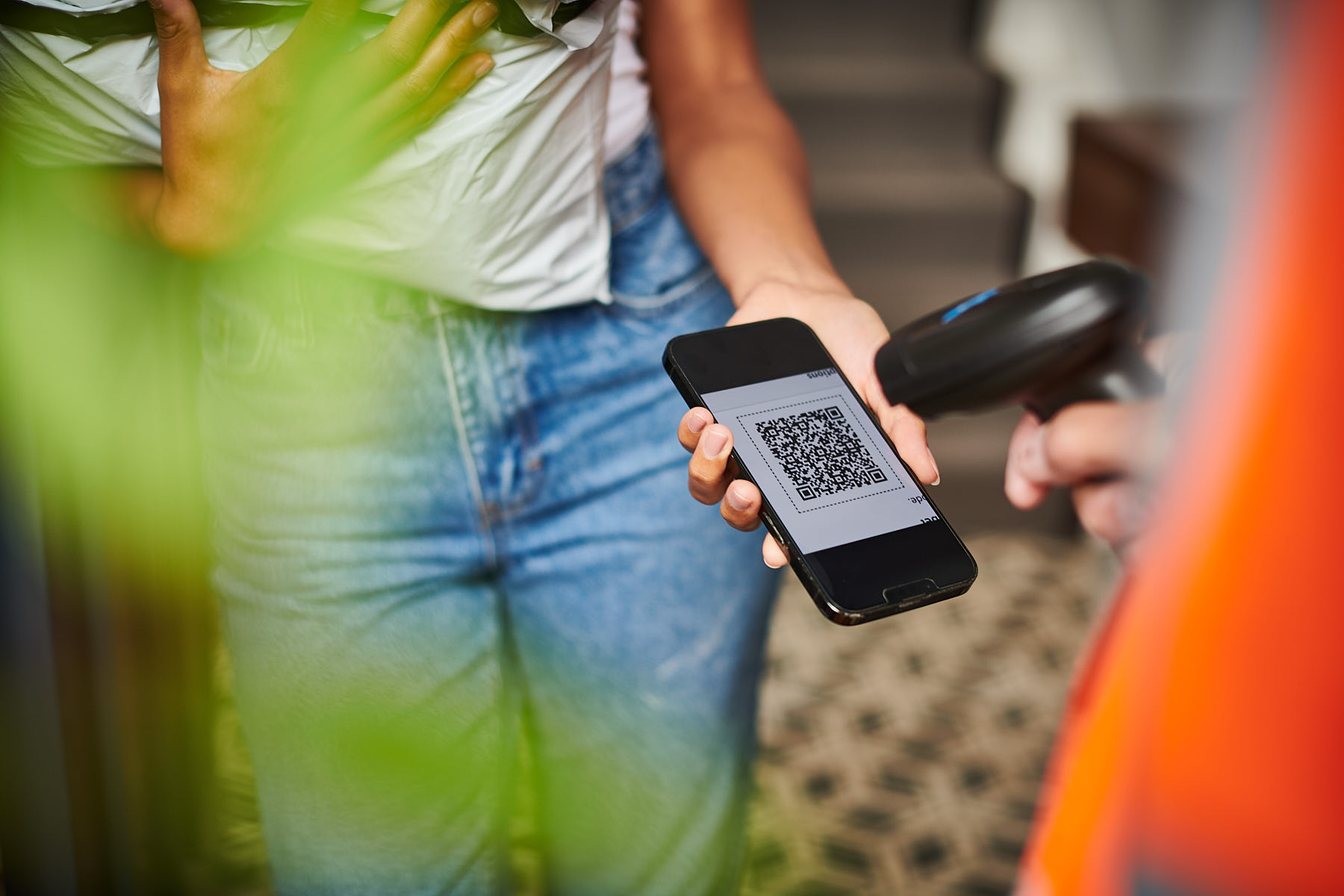
This flexibility can be promoted before the order is even placed. Knowing that a possible return can be dropped off three minutes from home reduces the effort the consumer anticipates. For retailers with physical stores, returning in store naturally belongs among the options, and Return to Store from ZigZag brings that physical journey into the digital process.
The goal is not to multiply options, but to be able to promise the customer a solution they genuinely consider accessible.
5. Cut the number of steps, not just loosen the terms
Displaying “easy returns” or “30-day returns” is not enough. The promise has to match a journey the customer can picture as simple. A retailer can present its policy as flexible and then require a manual request to customer service, a form that is hard to find, a mandatory printout, or offer little visibility on the parcel status.
40% of French consumers say the admin involved in making a return puts them off buying online, and 29% say a returns portal that is too difficult to use would deter them from sending an item back. Put differently, administrative complexity costs sales before it costs returns.
Lived experience confirms the gap between promise and reality. Among consumers who returned clothing or footwear in the past twelve months, only 30% describe a process that was simple and easy to follow. The most cited frictions:
Main frictions encountered during a return in France
These problems are experienced after the purchase, but they determine the credibility of everything you display before it.
An e-commerce returns portal brings order identification, item selection, return reason, and drop-off method into a single journey. The point is not to digitise returns for the sake of it, but to reduce the number of steps the consumer anticipates before buying and then actually has to handle.
The right measure is therefore not how many features you offer, but how many frictions the customer no longer has to deal with.
6. Give a realistic refund timeframe, then meet it
Refunds happen after the return, but the uncertainty they create starts before the purchase. A customer feels more comfortable ordering if they know how long their money could be tied up.
Once the parcel is handed to the carrier, they shift from acting to waiting: the question is no longer how to return the product, but when they will get their money back. The study gives precise thresholds.
When does a refund start to feel frustrating in France?
The margin is narrow: fewer than seven days separate a refund that feels fast from one that starts to irritate. 56% of consumers also rate refund flexibility, in particular being refunded quickly through their preferred method, as very or extremely important.
So the point is not only to shorten the timeframe, but to make the wait predictable. Telling the customer when their return is in transit, then received, then refunded stops them contacting customer service purely to find out where their money is. That transparency starts before the order: announcing a realistic timeframe and meeting it reduces both hesitation before the purchase and frustration after the return.
7. Offer the exchange before the refund, without forcing it
A return is not always a rejection of the product. When 54% of consumers name size or fit among the main reasons for returning clothing or footwear, the need is often very simple: the same item in a different size.
47% say they would prefer an instant replacement, for example in another size or colour, over a refund.

Exchanges answer both moments covered in this article. Before the purchase, knowing that a size swap will be possible lowers perceived risk. After the purchase, it stops a sizing issue from automatically becoming a lost sale. A journey that only offers refunds forces the customer to get their money back, return to the site, and place a new order if they still want the product.
ZigZag’s Live Exchanges instead present another size or colour at the moment the customer selects their return reason. Store credit is an alternative when the customer no longer wants the same item but is considering another purchase from the brand, which is what Refund to Store Credit enables.
One important caveat, often overlooked: 23% of consumers say being given store credit or an exchange instead of a refund would deter them from returning at all, and 16% say the same about a higher-value gift voucher offered in place of a cash refund. Offering the exchange first works. Making it compulsory does the opposite, and feeds exactly the distrust that makes people abandon their carts.
Where exchanges are available, it is worth stating that in the policy before the order, not only once a return has been started.
Since June 19, 2026, exercising the right of withdrawal has to happen directly online
The right of withdrawal has been around for a long time. For most distance purchases, French consumers have 14 days to change their mind, subject to the exceptions set out in the Consumer Code. That part has not changed.
The problem was how to exercise it. In practice, many customers had to find an address, send a letter, fill in a form that was hard to locate, or email customer service. The right existed, but using it took real effort.
That is precisely what the regulation fixed. Since June 19, 2026, businesses selling online in France must provide a free functionality allowing customers to withdraw directly from their interface. The decree requires it to be easy to identify, directly accessible, and available throughout the applicable window. In other words, the customer should be able to withdraw in a few clicks, where they ordered.
Mentioning the right of withdrawal in the terms and conditions is no longer enough. You need a journey the customer can use straight away, on their own. We go into what this means in practice in our guide to the right of withdrawal for online retailers.
It is the same logic as the seven actions above, except that this time it comes from the legislator: a right nobody knows how to use reassures nobody. The questions to ask are very concrete. Can the customer find the functionality on their own? Can they identify the relevant order without help? Do they get a confirmation?
One last point, often a source of confusion: this legal right is not your commercial return policy. The first is set by law and has exceptions. The second can be more generous, 30 or 60 days for example, and it is the one customers read before buying.
The checklist to audit your return policy
A return policy cannot be assessed by re-reading the “Returns” page. It has to be assessed from the point of view of a customer who is still hesitating.
Key points to check in an e-commerce return policy
The aim is to spot the places where uncertainty can turn into a reason not to buy. A generous policy that nobody understands stays ineffective. More limited terms can still reassure if they are simple, transparent, and backed by a journey that is genuinely easy to use.
What to take away
It is natural to measure returns through their costs: reverse transport, processing, inspection, restocking, and refunds. But a purely financial reading starts too late in the journey. Before a return even exists, the policy that frames it is already influencing the sale.
50% of French consumers have already abandoned a purchase because of a badly designed return policy. After the purchase, 72% say a bad return experience reduces their appetite to order from the same retailer again.
An effective returns strategy therefore works on three moments:
- before the purchase, reduce perceived risk and remove objections (actions 1 to 3);
- during the return, minimise the effort asked of the customer (actions 4 and 5);
- after the return, refund, exchange, and communicate fast enough to protect the relationship (actions 6 and 7).
It is also why treating delivery, tracking, and returns as three separate topics makes less and less sense: customers experience them as one.
The conclusion is not that every return should be free, or that every constraint should go. An effective policy is above all one the customer understands before buying and the brand can deliver on after the purchase.
The best return is therefore not the cheapest one. It is the one whose rules are clear enough not to block the order, whose journey is simple enough to keep the promise made before the purchase, and whose outcome, refund, exchange, or credit, actually matches what the customer needs.
Methodology: study conducted by Sapio Research for ZigZag Global among 2,000 French consumers.
Frequently Asked Questions

An e-commerce return policy sets out the conditions under which a customer can send back a product bought online: the return window, any fees, the available return methods, refunds, and exchange options. It also plays a role in conversion, since 54% of French consumers say they check the return policy before buying online.
A clear return policy lowers perceived risk before the purchase. In France, 50% of consumers have already abandoned a purchase because the return policy was hard to find, unclear, or too strict. Making the terms visible on the product page, in the cart, and before order confirmation can therefore help reduce e-commerce cart abandonment.
A good e-commerce return experience relies on a simple journey, information that is easy to find, and several return options. In France, 40% of consumers say the admin involved in making a return puts them off buying online, while 77% consider it important to be able to choose between several carriers. A clear returns portal and a printer-free journey wherever possible help reduce that friction.
Not necessarily. Free returns still matter to many customers, but transparency and fairness count too. 76% of French consumers think it is fair to reward customers who return at a reasonable rate while applying different conditions to very frequent returners. A paid returns policy can therefore work, as long as it is clearly explained before the purchase.
For an e-commerce refund, French consumers consider around 7.28 days on average to be acceptable. Frustration starts at about 11 days, while a timeframe closer to 16 days can reduce their appetite to order from the same retailer again. A fast refund, backed by clear updates on its progress, is therefore part of a good post-purchase experience.
.jpeg)

Since 2023, Joseph Thurston has been responsible for content creation at Shipup by ZigZag. He designs high value-added and directly actionable resources for brands that sell online, in order to help them improve their post-purchase experience and transform delivery into a driver of loyalty and growth.

Register for our webinar on September 9, 2026, to discover what 2,000 French consumers really expect from their delivery and return experience, and the levers to pull to strengthen their loyalty.


.png)
