
Peak Season: What Tracking 6.1 million Orders Really Reveals
When volumes explode, logistics becomes a decisive factor in the customer experience. From 6.1 million orders analyzed, discover the key lessons to better anticipate peaks in activity, reduce pressure on support and regain control thanks to fine logistics management, based on data.

In just two weeks, 6.1 million orders were tracked and 14.4 million delivery notifications sent by Shipup customers.
These figures reflect in a very concrete way the place occupied by the peak season in the e-commerce calendar: a period where volumes are exploding, where delivery promises are put to the test, and where logistics become the tipping point in the customer experience.
In France, from November to December, more than 180 million packages pass through during the peak season (source La Poste). At the level of brands that use Shipup (To run, Faguo, Maison du Monde, Yves Rocher, etc.), this resulted in a +124% increase in the number of tracked packages (6.1 million packages vs 2.7 million) during the Black Friday Cyber Monday period alone.
In this context of high tension, transport networks are saturating, e-commerce and support teams are under pressure, and each delay, each lack of information, becomes immediately visible on the customer side.
The peak season is therefore not only a commercial issue. It is a real logistical and operational test on an XXL scale, which reveals the ability of brands to absorb exceptional volumes, to manage their carriers and to maintain a clear, proactive and controlled delivery experience.
Based on the analysis of 6.1 million monitored orders, this article deciphers the logistical, post-purchase and customer experience KPIs that make the difference between experiencing the peak season and transforming it into a sustainable performance driver.
Logistics, the epicenter of the peak season
During the peak season, logistics is no longer a simple operational link responsible for transporting packages. It becomes the foundation on which the entire customer experience is based, promise of delivery displayed on the site until the actual receipt of the package.
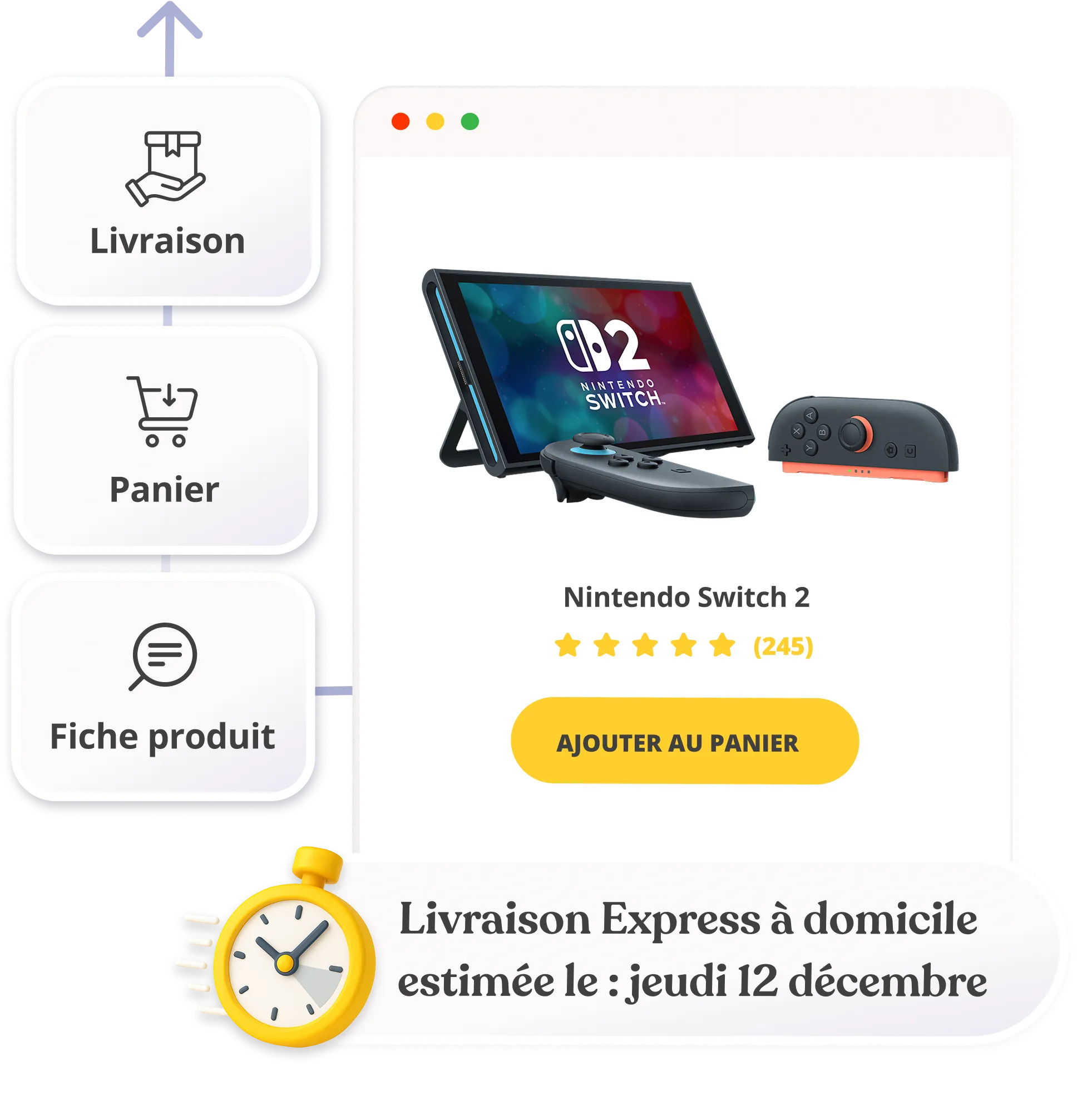
Between November and December, volumes explode under the effect of Black Friday, Cyber Monday and the end of year holidays. Warehouses are running at full speed, carriers are reaching their limits and deadlines are getting longer. In this context, the slightest logistical weakness, delay, saturation of a carrier, lack of visibility on a package, spreads instantly to the entire e-commerce chain.
Logistics then becomes a strategic tipping point:
- it conditions the reliability of delivery promises;
- it directly feeds the perception of the brand, even if delivery incidents are the responsibility of carriers;
- it determines the burden of customer support;
- and it ultimately impacts operational costs.
Contrary to popular belief, mastering the peak season does not necessarily mean delivering faster than everyone else. Above all, this means managing delivery accurately, having reliable and usable logistical data, and being able to anticipate tensions before they become visible on the customer side.
During periods of high activity, each package is a point of contact. Each delivery status, prepared, shipped, in transit, in transit, late, delivered, becomes critical information. When this information is incomplete, late, or erroneous, it generates uncertainty, anxiety and, very quickly, incoming requests such as “Where is my package?”.
Conversely, brands that approach logistics as a lever for managing the post-purchase experience transform the peak season into a competitive advantage. They are not subject to volumes: they orchestrate them. They don't react to incidents: they anticipate them. And above all, they maintain control of the customer relationship, even when the activity reaches its peak.
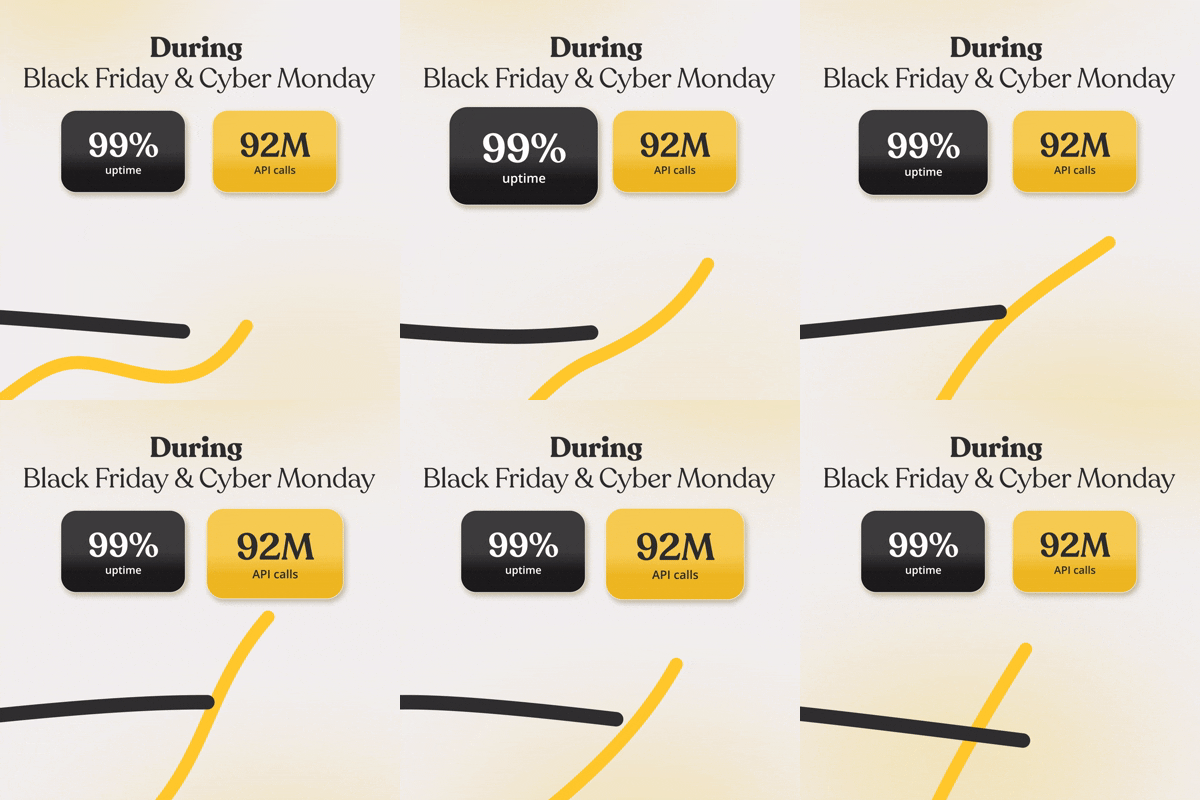
This is why, during the peak season, logistical performance can no longer be evaluated solely on delivery times. It must be analyzed through precise logistics KPIs, capable of measuring the quality of information, the responsiveness of systems and the ability to absorb volumes without degrading the customer experience.
Read weak signals before they become costly incidents
Once logistics have been identified as the tipping point for the peak season, the challenge is no longer to notice problems, but to identify them early enough to maintain control of the customer experience.
Because in periods of high activity, logistical difficulties do not first appear in customer complaints. They appear long before, through delivery anomalies that gradually accumulate: blocked packages, unsuccessful delivery attempts, saturated relay points, repeated delays in certain areas or sometimes even due to the absence of notifications.
At this point nothing is visible on the client side yet. But for e-commerce and logistics teams, these signals are already a leading indicator of risk.
This is precisely where monitoring the right logistics KPIs makes a difference. Not technical or theoretical indicators, but metrics directly linked to the reality on the ground and to the operational load of the teams.
Among the most useful indicators for a retailer during the peak season (but not only), we find:
- the rate of anomalous packages, which makes it possible to measure the real proportion of deliveries in difficulty;
- the number of packages impacted by incidents, a direct signal of the pressure to come on the support;
- the distribution of incidents by type: delay, failed delivery, relay point unavailable, no update;
- the evolution of the incident rate over time, to detect a gradual deterioration before it gets out of hand;
- the comparative performance of carriers, in order to quickly identify networks under tension.
Taken in isolation, these indicators may seem purely operational. But analyzed together, they offer a much more strategic reading: they make it possible to anticipate which packages are likely to generate customer dissatisfaction in the days that follow.
During the Black Friday Cyber Monday period, this ability to anticipate is crucial. A gradual increase in the rate of incidents or in the number of packages impacted is often the first warning signal, well before an explosion in requests “Where is my package?”. On the other hand, when these KPIs remain under control despite the increase in volumes, teams maintain real leeway.
Another key challenge for retailers: the objective reading of carrier performance. By relying on comparable and standardised incident rates, brands can go beyond the reports provided by carriers, identify recurring points of weakness and prioritise their actions, whether it's adjusting flows, reviewing certain promises or preparing for contractual discussions often scheduled at the beginning of the year.

According to Shipup’s neutral carrier data, based on 300+ customers during Black Friday / Cyber Monday (from November 24 to December 7 2025):
- Mondial Relay imported 83% of events within less than one hour.
- DPD ranked second, with 72% of events imported within less than one hour.
- Finally, Colissimo imported 57% of events within less than one hour.
And it is precisely this link between anticipated logistical incidents and avoided customer irritants that naturally leads to the following question: how to transform these weak signals into proactive communication and a reduction in the support burden?
When logistical incidents become customer irritants (and how to defuse them)
Anticipating logistical incidents is only valuable if they are dealt with before being perceived by the customer. It is precisely at this point that the delivery experience really comes into play.
From the end customer's point of view, an incident is never an indicator or a KPI. It's a frustration. A doubt. A prolonged wait with no explanation. And in the majority of cases, this frustration results in a very concrete action: contact with support.
During the peak season, the support teams systematically notice this: requests of the type “Where is my package?” become the first source of incoming tickets (on average 40% for brands using Shipup in 2025) because the information does not arrive at the right time.
At this stage, the nature of KPIs is changing. We are no longer just talking about logistical incidents, but about customer irritants:
- the volume of tickets linked to delivery tracking;
- the proportion of incidents discovered by the customer before the brand;
- the evolution of the support load during peaks of activity;
- the ability to explain a situation before it generates a complaint
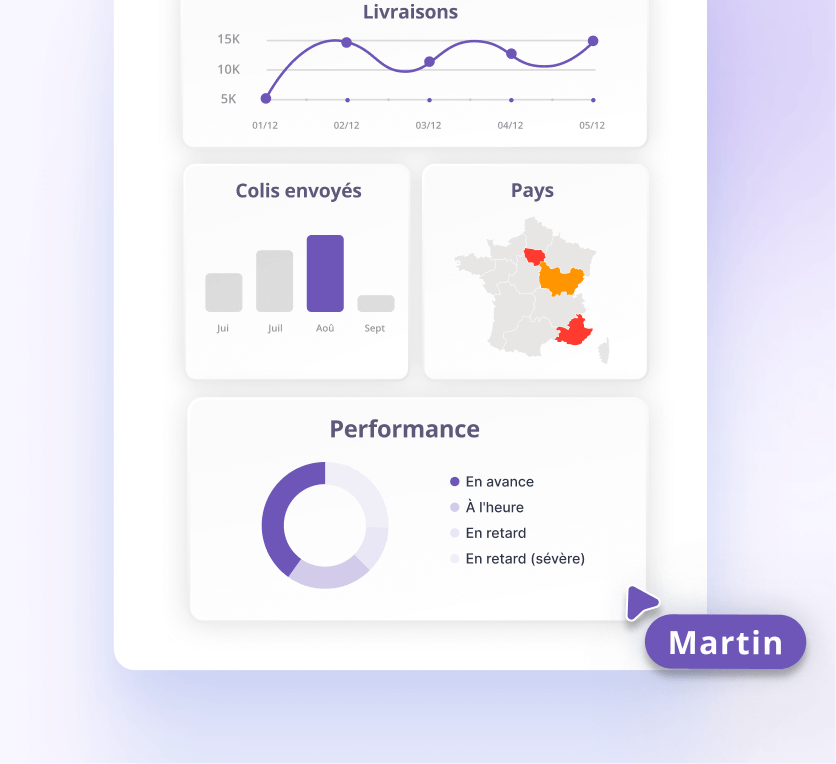
When weak logistical signals are not exploited in time, each anomaly becomes a sticking point. Conversely, when used as action triggers, they allow you to regain control.
Informing a customer of a delay before they worry, explaining a failed delivery attempt, warning of a saturated relay point: these simple actions transform a potentially negative experience into a proof of transparency and control.
In peak season, this approach makes a major difference on the support side. Teams no longer spend their time responding urgently, but dealing with really complex cases. The load is becoming more predictable, exchanges are improving in quality, and customer relationships are stabilizing despite the pressure.
But this proactive communication is not limited to “putting out fires.” When it is well orchestrated, it becomes the natural extension of the buying journey. It reassures, it informs, and above all, it maintains the link between the brand and the customer during one of the most sensitive moments in the e-commerce journey: waiting.
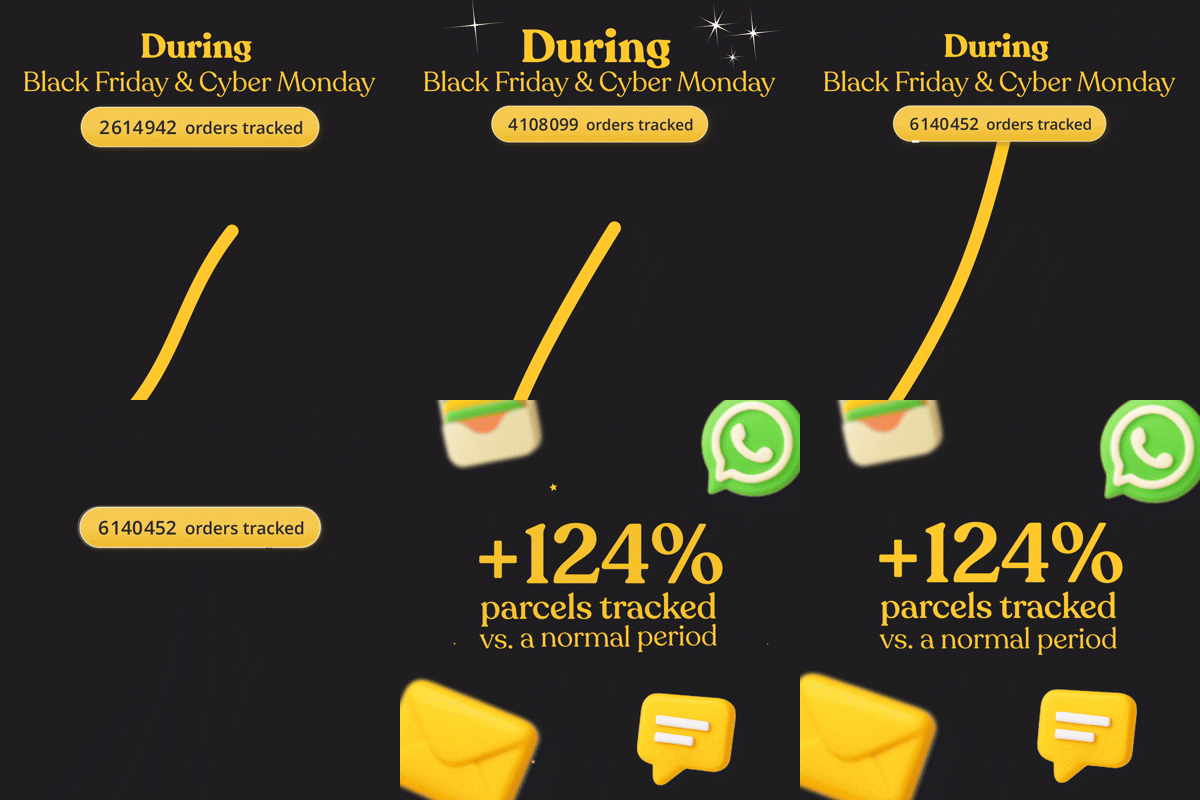
It is precisely at this tipping point that delivery ceases to be only a support subject to become a full-fledged post-purchase experience driver.
And once this communication has been mastered, a new question naturally arises: how to transform these logistical exchanges, which are necessary and expected, into opportunities for commitment, sustainable reinsurance and value for the brand? This is where post-purchase and the activation of a multi-channel communication strategy take on their full dimension.
Post-purchase: from the logistical message to the engagement lever
Once proactive communication is in place to defuse irritants, the nature of post-purchase changes. It is no longer just a question of informing or reassuring, but of capitalizing on a rare moment of attention in the e-commerce journey.
During the peak season, the customer waits for news about his order. Unlike other phases of the journey, he is attentive, receptive, and committed. Every delivery message gets a level of attention that few marketing communications get at other times of the year.
This is precisely what makes post-purchase a strategic lever, provided that it is managed on the basis of reliable logistics data and activated at the right time.
By relying on real delivery statuses, brands can structure useful and consistent post-purchase communication:
- confirm that the package has been taken care of;
- warn of a delay or a hazard;
- announce availability at a relay point with all the useful information: locker number and associated code;
- report an impending delivery;
- accompany the reception of the package.
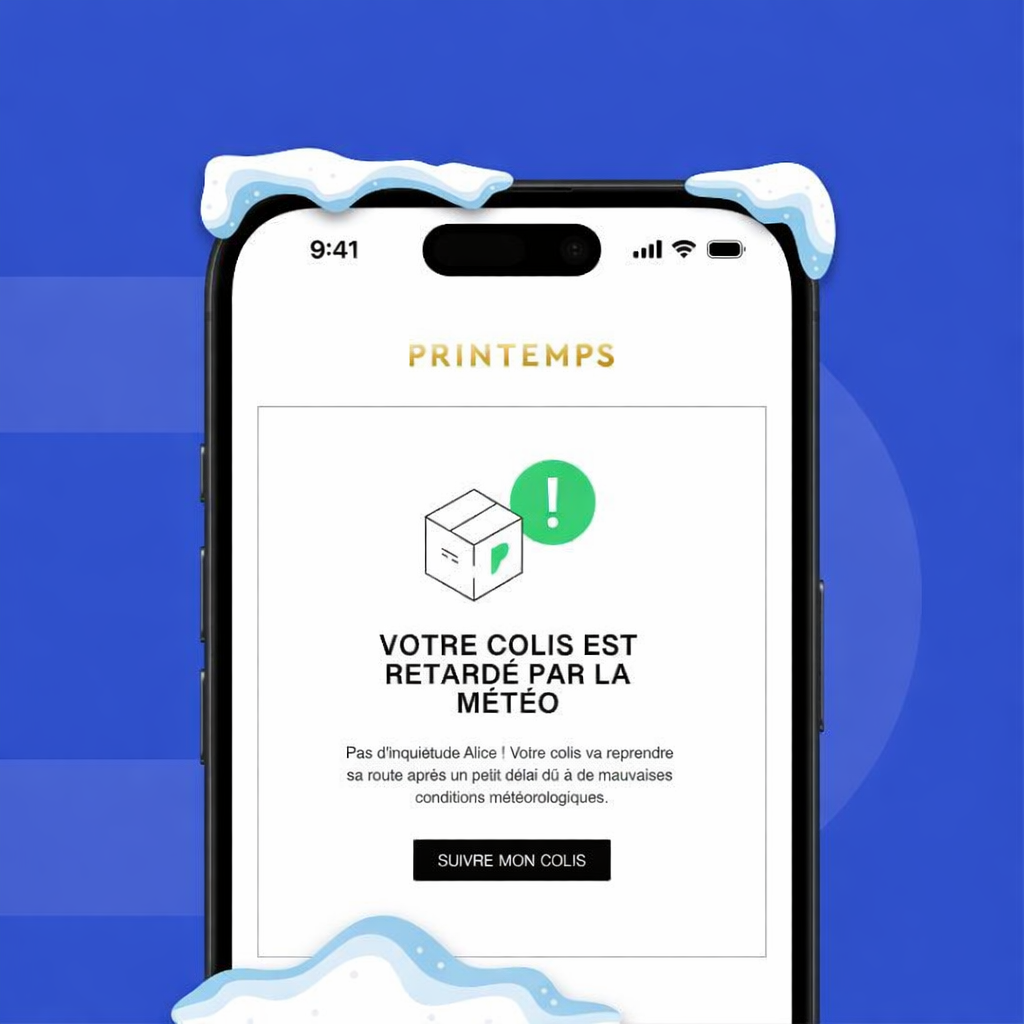
Each message is then naturally part of the customer journey. It does not interrupt the experience: it extends it. In peak season, this logic makes it possible to avoid two common problems. On the one hand, generic over-communication, which tires out the customer without providing value. On the other hand, poorly synchronized marketing messages such as a promotion sent to a customer whose order is late, which deteriorate brand perception.
Conversely, when post-purchase is orchestrated based on delivery data, it becomes a vector of sustainable reinsurance. The customer feels that the brand is in control of the situation, even when logistics are under stress.
This approach also has a direct impact on overall performance. Brands that structure their post-purchases during the peak season generally observe:
- a significant reduction in support requests;
- a better perception of brand reliability;
- a more stable customer relationship despite exceptional volumes.
But to move from well-thought-out post-purchase communication to real large-scale orchestration, you still need to have the right activation levers. That's exactly where marketing automation tools come in.
From delivery data to marketing activation: the key role of a solution like Klaviyo
When post-purchase becomes a strategic lever, a question quickly arises: how to automate these communications without losing relevance, especially during periods of peak activity?
During the peak season, the delivery data is no longer used only to inform the customer or to reduce the pressure on the support. When properly exploited, it becomes a marketing trigger with high added value, especially in CRM and marketing automation tools like Klaviyo.
Traditionally, post-purchase scenarios rely on static events, order placed, order delivered. In normal times, these signals may suffice. But during the peak season, they quickly show their limits.
Delays are getting longer, incidents are multiplying, and the same “shipped” status can cover very different realities on the customer side. The result: poorly synchronized messages, sent too early, too late or in an unsuitable context, at the risk of degrading the experience rather than improving it.
That's where activating rich delivery data in Klaviyo is a game changer.
By relying on real and contextualized logistics statuses, identified delay, failed attempt, failed attempt, available package, imminent delivery, package delivered, brands can trigger much finer and relevant post-purchase sequences, perfectly adapted to the constraints of the peak season.
Concretely, this allows for example:
- to automatically pause certain marketing messages when the delivery is abnormal;
- to trigger targeted reinsurance communications in the event of a delay or hazard;
- to relaunch the commitment only after a confirmed delivery, in a more favorable emotional context;
- to adapt the messages according to the type of delivery (home, relay point, multi-parcel).
Data observed during the Black Friday Cyber Monday period shows the massive adoption of this approach.

Over the period, brands using Shipup triggered 518,208 notifications via Klaviyo, an increase of +61% compared to an equivalent standard period.
This figure is revealing: in peak season, brands are not looking to communicate more, but to communicate better, relying on reliable delivery signals to orchestrate their post-purchase scenarios.
The impact is twofold.
On the client side, messages are perceived as more accurate, better synchronized, and more useful.
On the brand side, flows are gaining in efficiency, friction is decreasing and the pressure on the support continues to fall.
But once these scenarios are correctly activated, one last challenge remains to be addressed: on which channels to broadcast these messages to maximize their impact?
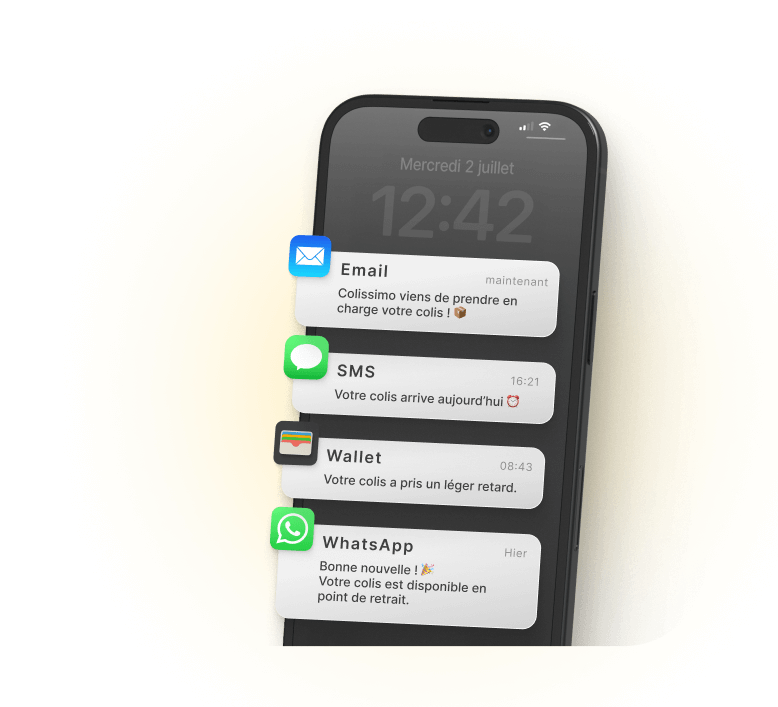
Email, SMS, WhatsApp, Apple Wallet: choosing the right channel at the right time
Once post-purchase scenarios are properly orchestrated in marketing tools, the question is no longer what to send, but how and where to deliver these messages so that they are really seen by the customer.
Because in peak season, communicating is no longer enough. It is necessary to reach the customer quickly, on the channel they are really consulting, in a context where they are already heavily solicited by promotions, order confirmations and marketing messages.
Historically, email remains the reference channel for delivery tracking. It makes it possible to transmit complete, structured and sustainable information: order summary, tracking link, status history. But during Black Friday Cyber Monday, email is in direct competition with dozens of other messages, often more urgent from a marketing perspective than a logistical one.
This is where so-called “instant” channels become all the more important.
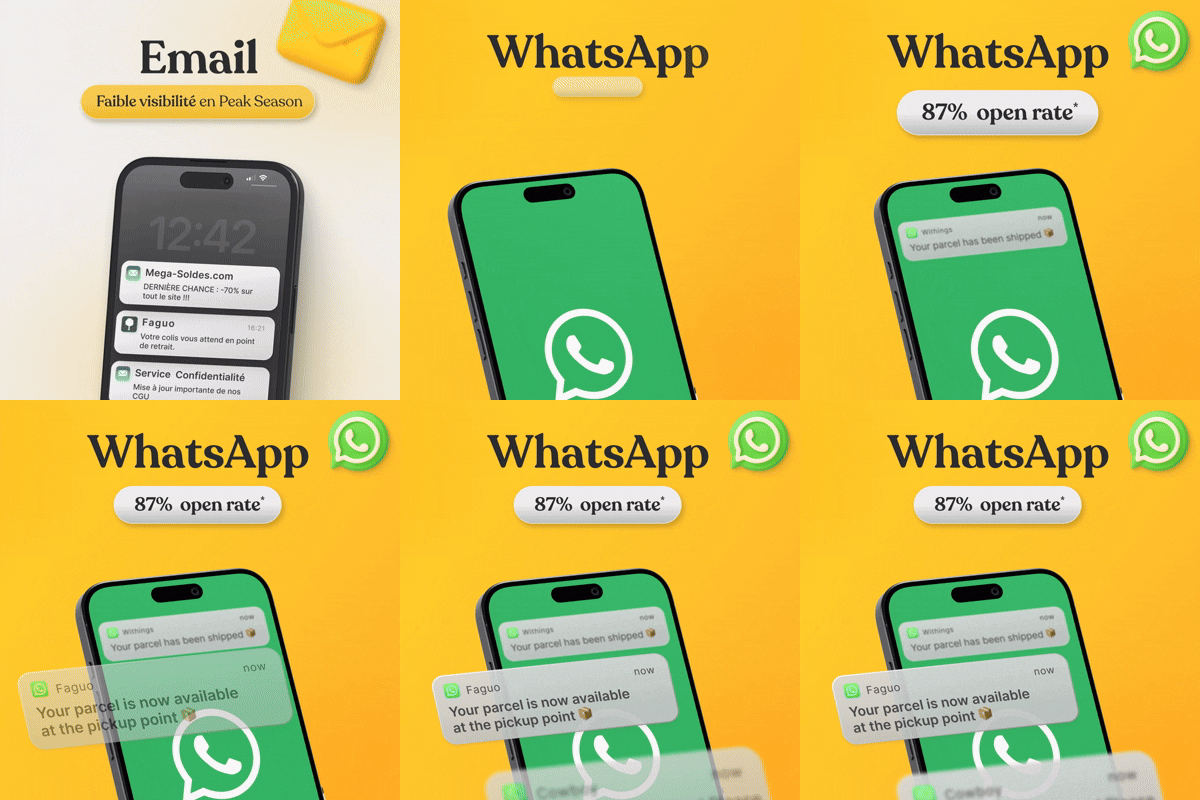
The SMS and WhatsApp respond to a need for immediate reinsurance. They are particularly suited to sensitive moments in the delivery process: delay, failed delivery attempt, package available at a relay point or imminent delivery. Their strength lies in their almost instantaneous visibility and their ability to cut through uncertainty.
Les Apple Wallet notifications, for their part, follow a slightly different logic. Persistent, effortlessly visible and directly integrated into the customer's mobile ecosystem (provided they are in the iOS environment), they allow a continuous presence to be maintained throughout the delivery period, without creating an overload of messages. In peak season, they play a key role in supporting waiting times and reducing the need for repeated checks on order status.
But beyond uses, it is the aggregated data observed during the Black Friday Cyber Monday period that makes it possible to measure the effectiveness of each channel in concrete terms.
By analyzing several million notifications sent by brands using Shipup over this period, a clear gap appears between the channels:
- The delivery tracking emails have an average opening rate of 73.66%;
- The WhatsApp notifications reach an average opening rate of 86.75%.
In such a context, these differences are far from being anecdotal. They show that, for messages with a high emotional impact, delay, imminent delivery, or saturated relay point, instant channels maximize the probability that the information will be seen on time.
The challenge for brands is therefore not to choose a single channel, but to intelligently distribute roles:
- email to structure follow-up and provide complete information;
- SMS or WhatsApp for critical messages that require immediate attention;
- Apple Wallet to support delivery over time, without friction and with a native mobile experience.
This multi-channel orchestration makes it possible to limit over-communication while ensuring that the customer never misses essential information. It also has a direct impact on the internal organization: when a message is seen at the right time, the probability that it will generate a support ticket decreases mechanically.
In peak season, this fine management of channels thus becomes a driver of operational performance as well as a key factor in customer experience.
And when post-purchase communication is controlled at this level, its effects go far beyond simple satisfaction: it directly influences business KPIs, from support load to loyalty.
When delivery and post-purchase directly impact business KPIs
When logistics and post-purchase communication are properly orchestrated, their effects are no longer limited to customer satisfaction. They result in measurable impacts on business KPIs, especially during the peak season, a period when each inefficiency is multiplied by volumes.
The first indicator concerned is, not surprisingly, the burden of customer support. During the peak season, requests related to order tracking represent on average up to 40% of incoming tickets for e-commerce brands. Each piece of information that is not received, misunderstood or transmitted too late automatically generates additional contact, with an immediate operational cost.
Conversely, when customers are notified proactively, on the right channels and at the right time, that pressure decreases. Support teams no longer spend their time reassuring about situations that are already known, but can focus on really complex cases or cases with high added value. The peak season then becomes more predictable, more controlled, and less expensive to absorb.
But the post-purchase impact doesn't stop at support. It also influences brand perception, an indicator that is often more difficult to measure, but critical in the long term. In times of high logistical tension, customers do not always distinguish brand responsibility from that of the carrier. What they remember is the ability, or not, of the brand to explain, anticipate and support.
Clear and proactive communication turns an expectation into a supervised experience. Even in the event of a delay, the customer feels that the brand is in control of the situation. This perception plays directly on trust, the propensity to recommend and tolerance to hazards, key factors for getting through the peak season without permanently degrading customer relationships.
In the medium term, these elements also have an impact on loyalty and repurchase. Delivery is the last moment of truth in the e-commerce journey. A smooth, transparent and reassuring post-purchase experience determines the probability of a customer coming back, especially after a purchase made in an intense promotional context such as Black Friday.
Finally, mastering these levers allows brands to better objectify their operational decisions. By linking logistical incidents, post-purchase communication and the effects observed on support or customer satisfaction, they have factual elements to:
- adjust their delivery promises;
- review the allocation of volumes between carriers;
- prioritize certain areas or types of orders;
- and prepare more calmly for the following peak periods.
In other words, delivery and post-purchase are no longer just cost centers to be contained during the peak season. They become transversal performance levers, capable of influencing both operational efficiency, brand image and customer value over time.
But once delivery is under control and post-purchase is optimized, another critical phase of the journey is naturally necessary in the weeks following the peak season: returns.
It is on this last link, which is often underestimated, but just as structuring, that the rest of the post-purchase experience is played out.
Post-peak season: why returns are becoming the next strategic front
Once the peak season is over, the teams' attention moves naturally. Volumes are falling, logistical pressure is easing, but a new peak is in the works. More diffuse, more spread over time, and just as structuring for the customer experience: feedback.
In the weeks following Black Friday, Cyber Monday and the end of year holidays, return flows increase mechanically. Unwanted gifts, size mistakes, impulse purchases related to promotions: all situations that extend the post-purchase journey well beyond delivery.
However, the challenges are surprisingly similar to those observed during the peak season on the delivery side. Customers expect clarity, visibility, and simplicity. Teams, on the other hand, must absorb additional volumes, manage sometimes long deadlines, and answer recurring questions: “Has my return been taken into account?” or “When will I get my money back?”
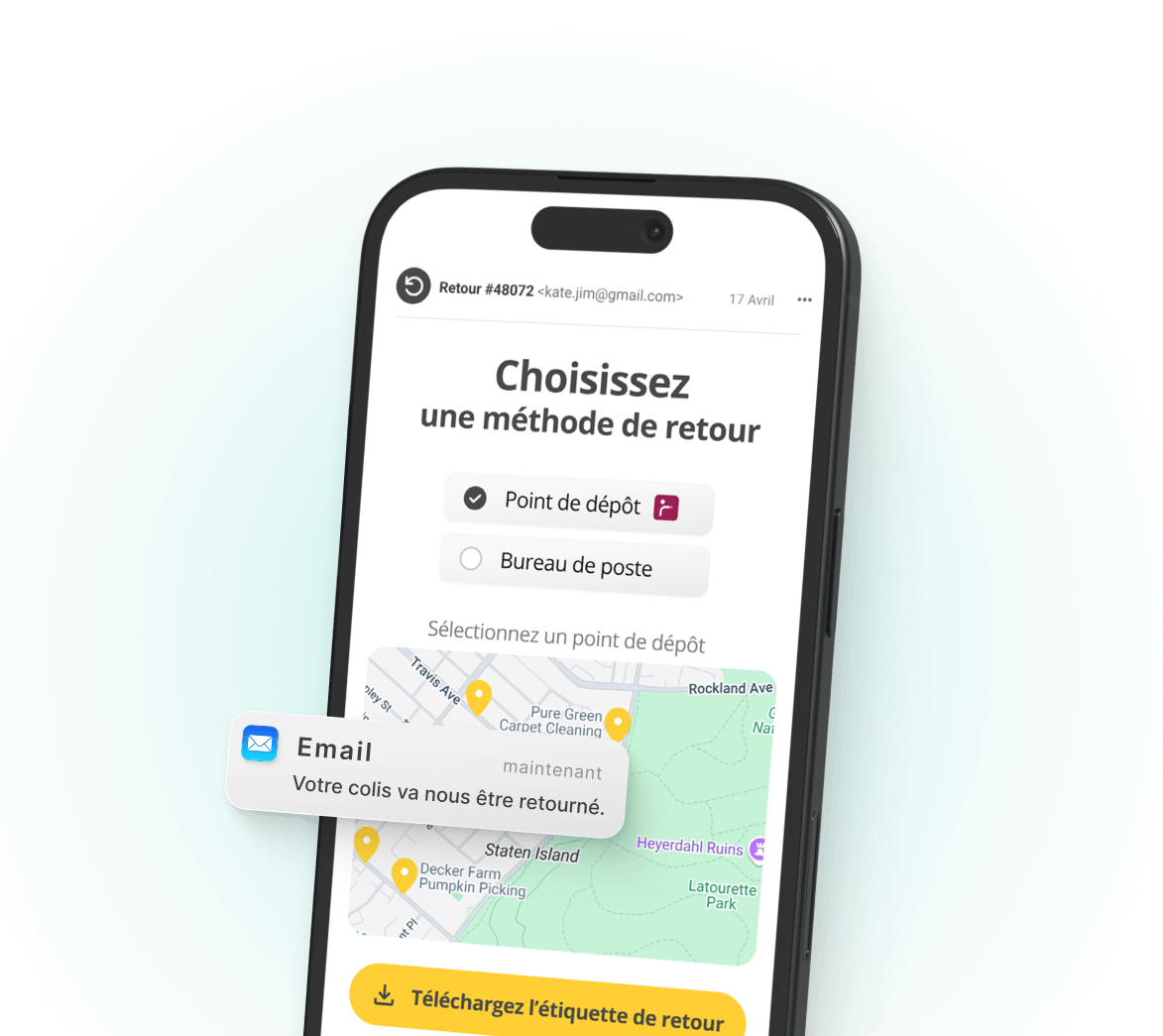
As with delivery, it is not so much the feedback itself that generates dissatisfaction, but the lack of information and foresight. A return without visibility quickly becomes a new point of friction, with a direct impact on the support load and brand perception.
The most mature brands therefore approach returns as the logical continuation of the post-purchase experience, and not as a simple operational constraint. They apply the same principles that make the difference during the peak season:
- data-driven management;
- real-time visibility;
- proactive communication;
- and orchestration of the right messages at the right time.
In this logic, delivery and returns are no longer two distinct subjects, but two sides of the same challenge: controlling the post-purchase from start to finish, especially in periods of high tension.
What the peak season really reveals
The peak season doesn't create problems. It amplifies them.
It tests organizations, reveals the strength of supply chains, the quality of available information and the ability of brands to manage the customer experience on a large scale.
The lessons learned from the analysis of 6.1 million monitored orders are clear: the brands that turn peak season into a performance driver are those that:
- anticipate rather than suffer;
- manage delivery through business-oriented KPIs;
- communicate proactively and multichannel;
- and consider post-purchase to be a strategic asset, not a cost center.
As the next peak periods approach, the question is no longer whether the peak season will put organizations under pressure, but whether brands will be able to derive a lasting advantage from it.
And for those who want to go further, the next challenge is already there: apply these same principles of control, visibility and communication to returns, in order to extend the customer experience well after delivery.
Frequently Asked Questions

.jpeg)

Since 2023, Joseph Thurston has been responsible for content creation at Shipup by ZigZag. He designs high value-added and directly actionable resources for brands that sell online, in order to help them improve their post-purchase experience and transform delivery into a driver of loyalty and growth.


.png)
